
Fifth Circuit Ruling on Aetna and Aramark: Implications for Insurance Arbitration
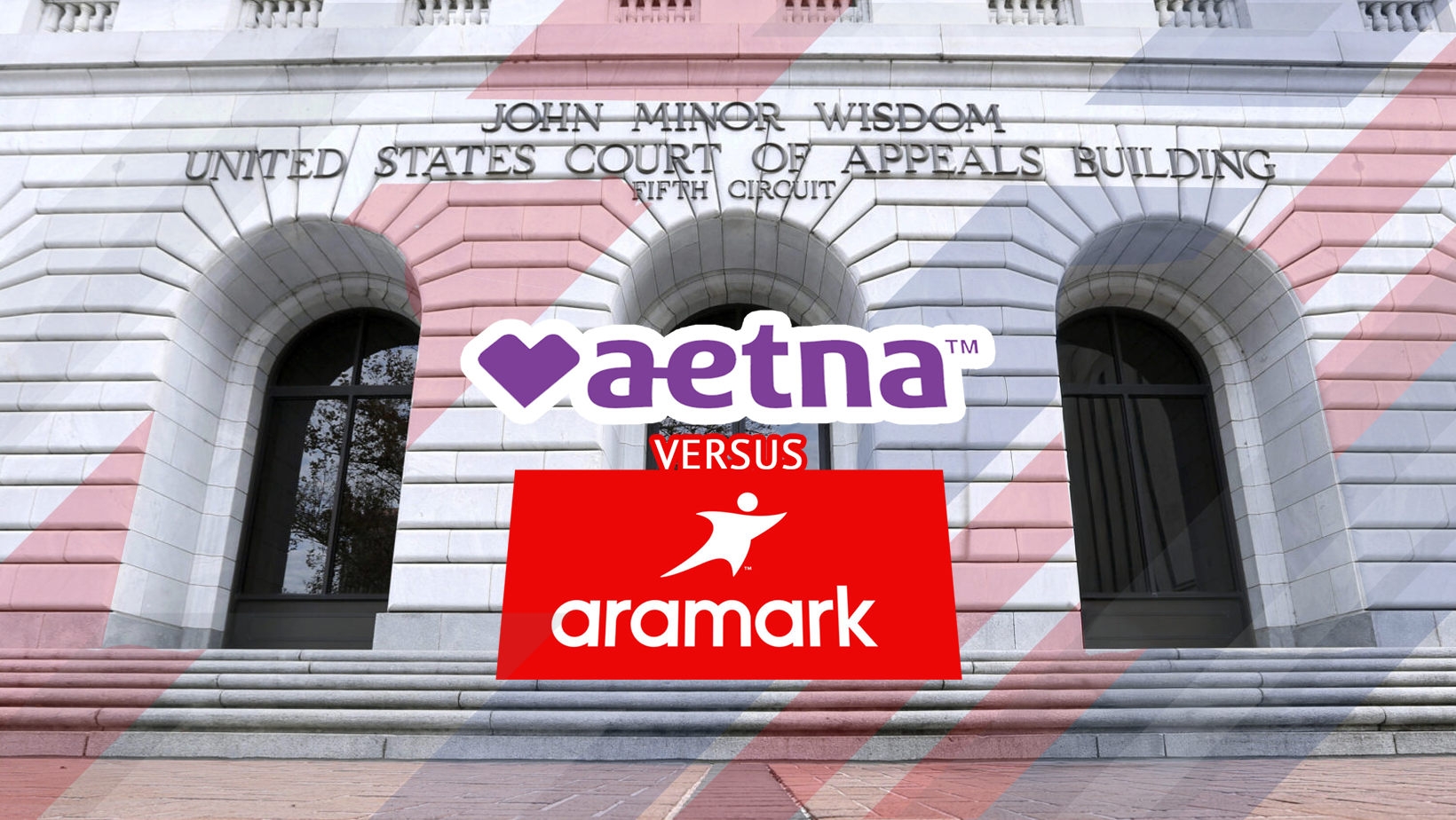
When Arbitration Meets ERISA: What the Fifth Circuit’s Aramark v. Aetna Decision Means for Insurers
The Fifth Circuit’s recent ruling in Aramark Services v. Aetna Life Insurance Co. is one of those decisions that quietly reshapes how insurers, TPAs, and plan sponsors think about contracts, arbitration, and fiduciary exposure. At its core, the case sits at the intersection of arbitration law and ERISA fiduciary duties, but its implications reach well beyond the courtroom.
For an industry built on carefully drafted agreements and delegated responsibilities, the ruling offers both clarity and caution.
The Dispute Behind the Decision
Aramark, which self-funds its employee health plans, hired Aetna as its third-party administrator under a Master Services Agreement. According to Aramark, Aetna mishandled aspects of plan administration, leading to alleged breaches of fiduciary duty under ERISA and significant financial losses.
Aetna moved to compel arbitration, pointing to the MSA’s arbitration clause. That clause required arbitration for most disputes, except those seeking equitable relief. The disagreement quickly narrowed to a deceptively simple question: who decides whether Aramark’s claims qualify as equitable relief under ERISA, a judge or an arbitrator?
Why Arbitrability Stayed With the Courts
The Fifth Circuit sided with Aramark on this point, holding that the court, not an arbitrator, should decide whether the claims fell within the arbitration carve-out.
Aetna argued that by incorporating the AAA Commercial Arbitration Rules, the parties had clearly delegated questions of arbitrability to the arbitrator. The court disagreed, concluding that incorporation alone did not clearly and unequivocally delegate arbitrability for disputes that were explicitly carved out of arbitration.
This reinforces a key principle for insurers and TPAs: delegation clauses must be unmistakably clear, especially when contracts include exceptions tied to specific remedies.
“The court made clear that incorporating arbitration rules is not a cure-all when the contract itself draws firm lines around what can and cannot be arbitrated.”
Fifth Circuit opinion
ERISA, Equitable Relief, and Monetary Exposure
Perhaps the most consequential aspect of the ruling lies in how the court treated Aramark’s requested relief. Aetna argued that because Aramark sought monetary recovery, the claims were legal rather than equitable and therefore subject to arbitration.
The Fifth Circuit rejected that framing. Drawing on Supreme Court precedent, the court reaffirmed that under ERISA Section 502(a)(3), fiduciaries can be subject to equitable relief that includes monetary surcharges. In other words, money damages do not automatically strip a claim of its equitable character when fiduciary misconduct is alleged.
For insurers acting as fiduciaries, this interpretation matters. It preserves a path for plan sponsors to pursue court-based claims for financial recovery, even when arbitration clauses are in place.
“Equitable relief under ERISA is not limited to injunctions or accounting remedies. Monetary surcharge remains firmly on the table for fiduciaries.”
Fifth Circuit opinion
A Single Section Worth Bookmarking
What insurance professionals should take away from this ruling:
-
Arbitration carve-outs tied to equitable relief will likely be interpreted narrowly and reviewed by courts, not arbitrators
-
Incorporating arbitration rules alone may not establish delegation of arbitrability for excluded claims
-
Fiduciary status under ERISA continues to carry exposure to equitable monetary remedies, even when arbitration clauses exist
-
Contract venue provisions and first-filed rules remain powerful procedural tools in multi-jurisdiction disputes
Venue Matters More Than Ever
The court also affirmed that the Texas action, as the first-filed case, was the proper forum to resolve the dispute. A later-filed motion in Connecticut did not displace the Texas court’s authority. For insurers operating nationally, this serves as a reminder that timing and venue strategy can materially influence litigation outcomes.
Looking Ahead
The Aramark v. Aetna decision reinforces a growing judicial willingness to scrutinize arbitration clauses in ERISA contexts, particularly where fiduciary duties and equitable remedies intersect. It also adds fuel to an ongoing circuit-level debate about the scope of equitable relief under ERISA, increasing the odds that the Supreme Court may eventually step in.
For insurers, TPAs, and plan sponsors alike, the message is clear: arbitration clauses remain valuable, but they are not impenetrable. Precision in drafting, clarity around delegation, and a realistic assessment of fiduciary exposure are no longer optional.