
Florida Grower Hid $6 Million in Crop Sales to Collect $1.7 Million in Insurance Payments
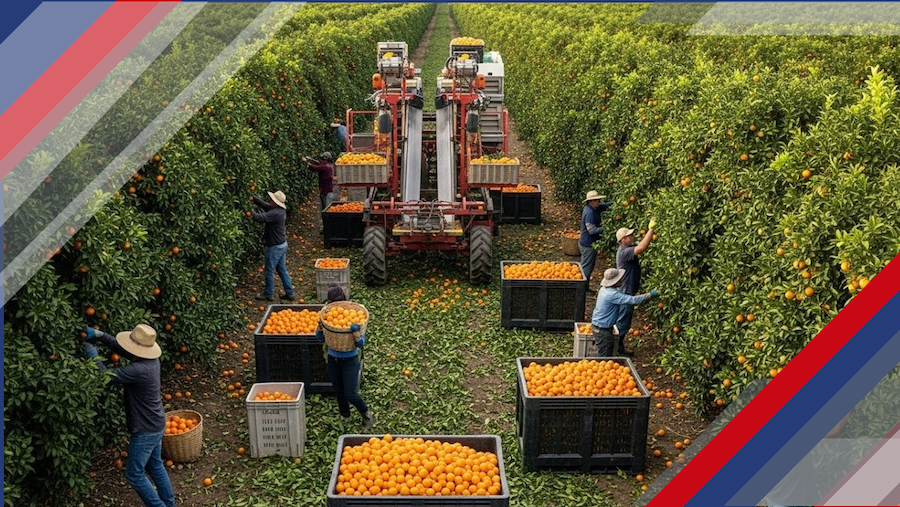
A Southwest Florida grower admitted concealing more than $6 million in pepper and tomato sales to collect nearly $1.75 million in improper federal crop insurance payments, exposing how falsified agricultural production records can turn a program designed to protect farmers into a multimillion-dollar fraud scheme.
The case centers on Mark Frisbie, a grower from Punta Gorda, Florida, who pleaded guilty on September 29, 2026, to submitting a false federal crop insurance claim. According to the U.S. Department of Justice, Frisbie knowingly certified inaccurate production information over multiple growing seasons, making his farming operation appear substantially less productive than it actually was.
Between 2019 and 2024, Frisbie grew and sold more than $6.8 million worth of bell peppers and tomatoes but reported less than $800,000 in sales for crop insurance purposes. The difference was not an accounting oversight. Prosecutors said the underreporting was deliberate and resulted in $1,748,408 in federal crop insurance indemnities that should never have been paid.
The guilty plea received renewed attention on October 21, when federal officials included the case in a nationwide agricultural benefits fraud enforcement announcement. For insurance agents, agencies, and carriers, the case provides an unusually clear example of how inaccurate production reporting can undermine the integrity of agricultural insurance and expose weaknesses in claims verification.
Millions in Crop Sales That Never Appeared on Insurance Claims
The underlying fraud was relatively straightforward. Frisbie operated in Southwest Florida's agricultural region, where growers produce fresh-market vegetables for commercial distribution. His crops included bell peppers and tomatoes, commodities whose production, harvest, and sales records can play an important role in determining insurance losses.
Federal investigators found that the actual commercial performance of the farming operation differed dramatically from the figures submitted in crop insurance claims.
Over the relevant period, the operation generated more than $6.8 million in sales. Yet the production information certified for insurance purposes reflected less than $800,000. By concealing more than $6 million in agricultural sales, Frisbie created a substantially misleading picture of the crops' actual production.
That discrepancy mattered because crop insurance payments depend on the terms of the policy and the extent of the insured loss. When a producer reports substantially less production than actually occurred, the information used to evaluate a claim can make the loss appear larger than it was.
In this case, prosecutors determined that the false reporting generated almost $1.75 million in payments that would not have been issued if accurate information had been provided.
The magnitude of the discrepancy makes the case especially memorable. This was not a disagreement over a relatively small harvest adjustment or an isolated paperwork error. The admitted conduct involved repeated certifications over several crop years and millions of dollars in concealed sales.
The Financial Consequences Extend Beyond Crop Insurance
Frisbie's misconduct was not limited to insurance claims. He also admitted defrauding two federal agricultural assistance initiatives: the Coronavirus Food Assistance Program and the Emergency Relief Program.
These programs were intended to help agricultural producers navigate extraordinary financial pressures, including disruptions associated with the pandemic and qualifying agricultural losses.
Under his plea agreement, Frisbie agreed to pay $1,506,992.26 in restitution to the USDA's Farm Service Agency for fraud involving those assistance programs, in addition to $1,748,408 to the Federal Crop Insurance Corporation.
Combined, his agreed restitution obligations total $3,255,400.26.
That broader financial exposure demonstrates an important issue for agricultural insurers. Production records can influence more than one federal benefit program, meaning false information about a farming operation may have consequences beyond a single insurance claim.
The same business records that help establish agricultural production can also be relevant when authorities evaluate eligibility for certain disaster assistance or farm relief benefits. Misrepresenting those records can create overlapping problems across multiple programs.
Frisbie is scheduled to be sentenced on January 11, 2027. His guilty plea establishes his admitted conduct, but the court has not yet imposed a sentence.
Why Crop Insurance Depends on Accurate Production Records
Federal crop insurance is an essential component of the American agricultural safety net. Administered through the USDA's Risk Management Agency and the Federal Crop Insurance Corporation, the program helps producers manage qualifying agricultural losses that could otherwise threaten an entire farming operation.
Unlike many conventional insurance products, agricultural coverage frequently requires detailed information about acreage, planting practices, production history, harvested quantities, and the disposition of crops.
For certain policies, those records help establish expected production, calculate covered losses, or substantiate the amount of production harvested or sold. The applicable requirements vary by commodity, policy type, and insurance year.
Fresh-market vegetables present particular verification challenges. A single growing operation may harvest crops repeatedly, sell through multiple commercial channels, and experience substantial differences in production or marketable yield across fields and planting periods.
The operation's supporting documentation can therefore become just as important as the physical condition of the crop.
How False Reporting Can Create an Artificial Insurance Loss
Consider a simplified example. A grower produces and sells a substantial quantity of peppers during an insured period but reports only a fraction of that production when submitting a claim.
If the claim calculation relies on those understated figures, the resulting payment may reflect an exaggerated loss, even though the actual harvest and commercial sales were considerably higher.
This example illustrates the general risk, not a universal formula for crop insurance claims. Actual indemnities depend on the policy's specific coverage provisions, production guarantees, loss adjustments, and other applicable conditions.
The central problem is the same regardless of those technical details: an insurer cannot reliably determine the amount of an insured loss when material production information is intentionally withheld or falsified.
The Records That Can Make or Break a Crop Insurance Claim
For agricultural insurance professionals, the Florida case reinforces the value of documentation that can independently substantiate a producer's reported output.
Production records are especially important when an operation grows high-value specialty crops, uses multiple sales channels, or manages production across numerous fields or planting periods.
Depending on the commodity and policy requirements, several types of documentation may help verify reported production:
- Buyer invoices and settlement statements: Records showing crop quantities, transactions, and payments from commercial purchasers.
- Harvest and packing records: Documentation identifying quantities harvested, packed, shipped, or otherwise handled.
- Warehouse and shipping documents: Records that can help reconcile physical crop movement with reported production.
- Accounting and deposit records: Financial information that may corroborate crop sales and reveal material discrepancies.
- Acreage and planting records: Documentation connecting insured fields, production periods, and reported harvest activity.
These documents are not interchangeable, and no single record necessarily establishes the correct amount of production. For example, revenue figures alone may not directly establish harvested quantities, particularly when prices fluctuate or crops are sold in different grades.
Nevertheless, significant inconsistencies among sales records, harvest documentation, and certified insurance information can justify closer examination.
In Frisbie's case, the discrepancy was particularly substantial because the admitted actual sales exceeded the reported sales by more than $6 million.
What the Case Means for Insurance Agents and Agencies
For independent agents working with agricultural producers, the case highlights why accurate reporting should be treated as an ongoing client responsibility rather than an administrative requirement that matters only when a claim is filed.
Agents frequently help producers understand coverage options, reporting deadlines, policy obligations, and the documentation needed when losses occur.
While agents are not expected to independently audit every commercial transaction, they can help clients establish better reporting practices and understand the seriousness of certifying inaccurate information.
Client Education Is an Important Fraud Prevention Tool
Many legitimate agricultural producers manage complex operations involving multiple locations, seasonal workers, changing buyers, and large volumes of records. Reporting mistakes can occur even without fraudulent intent.
Agents can help distinguish ordinary administrative corrections from the consequences of knowingly providing false information by reinforcing the importance of complete, accurate, and timely production reporting.
An effective conversation might focus on whether producers maintain organized harvest records, reconcile commercial sales against reported production, and understand who is responsible for reviewing and certifying insurance documents.
This approach protects legitimate policyholders as well as insurers. Producers who maintain reliable records are generally better positioned to substantiate legitimate claims, respond to documentation requests, and resolve discrepancies.
Agency Procedures Matter, Too
Agricultural agencies can also examine their internal procedures for collecting information and documenting client communications.
Clear responsibilities, careful record retention, and prompt escalation of significant inconsistencies can help reduce errors and potential disputes.
When an agency encounters information that materially conflicts with a client's certified production figures, the appropriate response is to follow applicable program requirements and carrier procedures rather than overlook the discrepancy.
For agencies handling complex commercial farming accounts, good documentation is not simply a compliance exercise. It supports accurate coverage administration and can protect the agency when questions arise about what information was provided and when.
Why Carriers Have a Direct Stake in Production Reporting Integrity
The federal crop insurance system operates through a public-private partnership. Approved insurance providers sell and service federal crop insurance policies, while the federal government supports the program through mechanisms that include premium subsidies and risk sharing.
That structure makes claims accuracy important to both private insurance organizations and taxpayers.
Improper indemnities can consume funds intended to compensate eligible producers for genuine agricultural losses. They can also create additional investigative expenses, administrative burdens, and pressure for stronger oversight.
For carriers and approved insurance providers, the challenge is identifying meaningful inconsistencies without turning every legitimate agricultural loss into an unnecessarily difficult claims experience.
Potential safeguards include more consistent reconciliation of required production documentation, closer examination of material differences between reported output and supporting business records, and appropriate referrals when evidence suggests intentional misrepresentation.
These controls should remain proportionate to the risk and consistent with federal program rules. An unusual harvest, an unexpected production decline, or a discrepancy requiring correction does not automatically indicate fraud.
The distinction between an honest reporting problem and intentional deception is fundamental to fair claims handling.
A Federal Enforcement Effort With Wider Implications
The renewed attention surrounding Frisbie's guilty plea comes from a broader federal initiative targeting fraud involving USDA programs.
On October 21, 2026, the Justice Department announced the results of a coordinated enforcement effort involving its Fraud Division, the USDA, the USDA Office of Inspector General, and multiple federal and state law enforcement organizations.
The effort, covering actions between September 1 and October 21, involved more than 40 defendants and nearly $45 million in intended federal losses associated with alleged or proven fraudulent schemes.
Approximately $42 million involved fraud against the Supplemental Nutrition Assistance Program, commonly known as SNAP. The Middle District of Florida's contribution involved the crop insurance and agricultural assistance fraud admitted by Frisbie.
The announcement illustrates how federal investigators are approaching fraud across different government benefit programs, including agricultural insurance.
Although the underlying programs serve different purposes, they share an important vulnerability: payments and benefits can depend on information submitted by participating individuals or businesses.
When those submissions are deliberately falsified, the consequences can extend beyond the improper payment itself, potentially leading to restitution, criminal prosecution, and increased scrutiny of program controls.
The Cost of Fraud for Honest Farmers
The larger concern is not simply the amount involved in one criminal case. It is the potential damage to a risk management system that legitimate farmers depend upon.
American agriculture operates under substantial uncertainty. Severe weather, disease, pests, and other qualifying causes of loss can damage crops or reduce production despite a grower's best efforts.
Crop insurance helps eligible producers manage those risks and maintain financial stability after covered losses. For operations that depend on seasonal revenue, the ability to recover from a major production setback can be critical.
Fraudulent claims divert resources from the intended purpose of that protection and can weaken confidence in the reporting practices supporting the program.
They may also contribute to demands for more extensive documentation and verification, creating additional work for honest producers, agents, adjusters, and insurers.
That is why effective fraud prevention should be viewed as a way to preserve access to dependable coverage, rather than merely as an effort to reduce claims payments.
A strong agricultural insurance marketplace needs both rigorous oversight and a claims process that responds efficiently when policyholders suffer legitimate losses.
What Insurance Professionals Should Watch Next
Frisbie's sentencing hearing, scheduled for January 11, 2027, is the next major milestone in the case. The court will determine the appropriate sentence after considering the applicable legal standards and information presented during the proceedings.
His agreement to repay more than $3.25 million across federal insurance and agricultural assistance programs provides a concrete example of the financial consequences associated with fraudulent benefit claims.
Beyond the sentencing, the case raises practical questions about how agricultural insurers and program administrators can better identify significant discrepancies between commercial production records and insurance reporting.
For agents and agencies, the immediate lesson is to make accurate documentation an ongoing part of client service. For carriers, it is to maintain effective verification practices while preserving fair treatment for legitimate claimants.
The Florida grower's admitted fraud involved a remarkably simple contradiction: millions of dollars in crops were sold, but only a small fraction of those sales appeared in the information certified for insurance purposes.
Ultimately, that contradiction generated almost $1.75 million in improper insurance payments and contributed to restitution obligations exceeding $3.25 million.
For an industry built on measuring and transferring risk, the case reinforces a fundamental principle. Reliable insurance protection depends on reliable information, and when production records do not reflect reality, the consequences can reach far beyond a single claim.