
State Farm Issues Record $5 Billion Dividend to Auto Policyholders
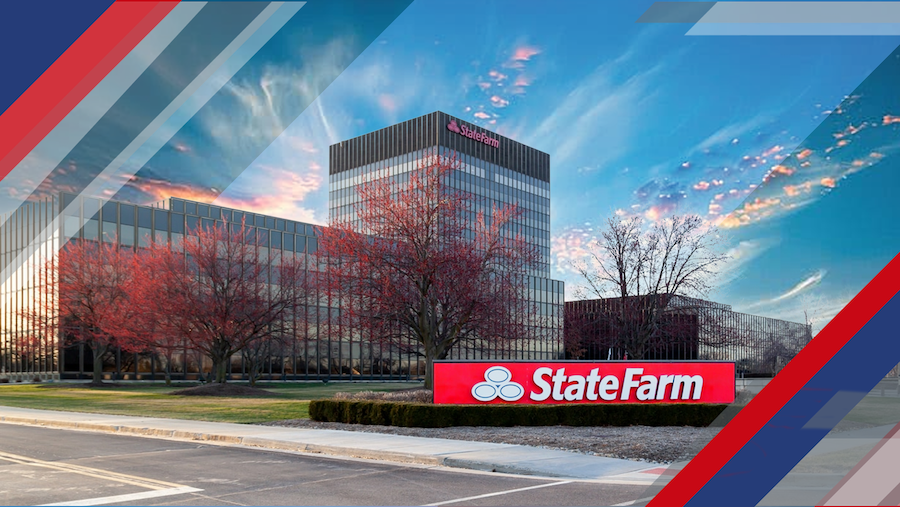
State Farm is sending $5 billion back to auto customers, and the bigger story for insurance professionals is what that payout says about the personal auto market in 2026.
A Record Dividend Arrives as Auto Insurance Turns a Corner
State Farm Mutual Automobile Insurance Company has begun distributing its one-time $5 billion policyholder dividend, the largest such payout in the company's more than 100-year history. Payments started rolling out in late July 2026, and because the distribution involves policies covering more than 49 million vehicles, the process is expected to continue for several months.
For qualifying customers, the math is relatively straightforward. The dividend is based on the premium paid for eligible personal auto coverage during 2025. Depending on the state, the dividend percentage ranges from 4% to 10%, with State Farm estimating an average payment of roughly $100 per insured vehicle.
Customers who had an eligible State Farm Mutual personal auto policy during 2025 can qualify even if they have since moved their coverage elsewhere, provided their calculated dividend exceeds the applicable minimum. Customers are being contacted directly, with electronic payment options available for many policyholders and mailed checks used for others.
For agents and carriers, however, the most important question is not simply how customers receive the money. It is why one of the country's largest personal auto insurers is in a position to return $5 billion at all.
“That translated this year to lower auto rates and cash back in the form of a $5 billion policyholder dividend.”
The Financial Rebound Behind the Checks
State Farm's 2025 financial results illustrate how dramatically personal auto underwriting changed in a relatively short period. The company's property and casualty businesses reported a combined underwriting gain of $1.5 billion in 2025, compared with a $6.1 billion underwriting loss in 2024.
Auto produced the biggest turnaround. State Farm reported $71.3 billion in earned auto premium for 2025, along with a $4.6 billion underwriting gain. A year earlier, its auto business had posted a $2.7 billion underwriting loss.
Investment and other income strengthened the picture further. State Farm's property and casualty operations recorded an $8.5 billion pre-tax operating profit for 2025, while the company's reported net worth increased from $145.2 billion at the end of 2024 to $170 billion at the end of 2025.
Those numbers matter because they put the dividend in context. This is not simply a marketing promotion or a routine premium refund. State Farm is a mutual company, meaning State Farm Mutual does not have public shareholders competing with policyholders for distributions of value. When underwriting and capital conditions allow, the mutual structure can provide another mechanism for returning value directly to qualifying customers.
This Is Bigger Than State Farm
The improvement in auto underwriting is appearing across the industry. The Insurance Information Institute reported that U.S. personal auto insurers produced a net combined ratio of 91.8 in 2025, the strongest post-pandemic underwriting performance for the line and an improvement from 95.3 in 2024. A combined ratio below 100 indicates an underwriting profit.
The turnaround follows several difficult years when carriers were chasing rapidly rising loss costs. Vehicle prices, parts shortages, repair complexity, labor costs and inflation pushed claim severity higher, while filed rates often took time to catch up. Insurers responded with substantial rate increases and tighter underwriting.
By 2025, some of those pressures had eased. Repair and vehicle cost trends became more favorable, collision frequency declined, and several years of pricing action flowed through carrier books. State Farm specifically cited lower auto repair costs and reduced collision frequency as factors supporting its improved results.
The company has also been lowering rates. State Farm said recent reductions across 40 states averaged about 10% and represented approximately $4.6 billion in annual premium savings for customers. Taken together, the rate reductions and dividend show how quickly the conversation can change when underwriting catches up with loss trends.
Profitability Does Not Mean Every Cost Problem Has Disappeared
Insurance professionals should be careful not to translate stronger results into a simple message that auto insurance has suddenly become inexpensive to provide. Physical damage trends have improved considerably, but liability severity remains a concern.
Triple-I has reported a widening gap between physical damage and liability claim trends. While repair-related loss ratios benefited from improved supply chains and lower claim frequency, liability claims continued to face higher medical, legal and settlement costs. The organization estimates that average liability claim costs rose substantially between 2019 and 2025.
That distinction matters for carriers making future pricing decisions. A favorable year can create room for reductions, dividends or more competitive underwriting, but persistent liability severity can quickly narrow that room. For agents, it reinforces why today's rate decrease should not be presented to customers as a guarantee of permanently falling premiums.
Florida Shows a Different Route to Money Back
Florida offers another striking example of stronger auto profitability reaching policyholders, but the mechanism is different.
The Florida Office of Insurance Regulation announced in 2025 that Progressive had recorded an estimated $950 million policyholder credit expense connected with profits from its Florida personal auto business. The credits were expected to affect approximately 2.7 million active personal auto policyholders in the state.
Unlike State Farm's mutual-company dividend, Florida's Progressive credits are connected to the state's excess-profit requirements for motor vehicle insurance. Florida law limits the excess profits insurers may retain and can require money to be returned to policyholders when statutory thresholds are reached.
| Program | Why It Pays | Customer Reach |
|---|---|---|
| State Farm: $5 billion national auto dividend | Basis: mutual structure plus strong 2025 underwriting performance | Reach: qualifying 2025 personal auto customers nationwide |
| Progressive: roughly $950 million Florida policyholder credits | Basis: Florida statutory limits on excess auto profits | Reach: about 2.7 million active Florida policyholders |
Florida's Rate Trend Adds Another Layer
Florida regulators also reported that the state's five largest auto insurance groups, representing roughly 78% of the market, indicated an average 6.5% rate decrease for 2025. That was a dramatic reversal from an average 31.7% increase among the same group in 2023.
State officials have attributed part of that improvement to tort and insurance reforms that reduced litigation and certain loss costs. Progressive itself reported that changes following Florida's 2023 insurance reforms contributed to lower loss costs on some personal auto accident claims and favorable reserve development.
The lesson for the broader industry is not that Florida's experience can be copied identically in every jurisdiction. Claims environments, legal systems, regulatory structures, competitive conditions and catastrophe exposures differ substantially by state. It does show, however, how quickly changes in loss experience and legal costs can work their way through underwriting results and eventually reach consumers.
“We are seeing steady signs of auto insurance rates dropping in Florida.”
For Agents, the Dividend Is a Customer Conversation Waiting to Happen
A customer receiving an unexpected insurance payment is likely to have questions, and those questions create an unusually positive reason for agents to engage.
The opportunity goes beyond explaining how a dividend was calculated. Customers have lived through several years of substantial auto premium increases, and many still view insurance primarily through the lens of price. A tangible payment gives agents an opening to explain underwriting cycles, mutual ownership, rate changes, coverage choices and the difference between a one-time dividend and an ongoing premium reduction.
There is also a retention angle. J.D. Power's 2026 insurance shopping research found that 53% of auto insurance customers had shopped for coverage, down from 57% a year earlier but still historically elevated. Shoppers were obtaining an average of 3.5 quotes, the highest level recorded in the study, and nearly half of new auto policies were being purchased digitally.
In other words, customers may appreciate receiving a dividend while still comparing competitors on their phones the same afternoon. Financial rewards are valuable, but they do not remove the need for strong service, clear coverage explanations and consistent account reviews.
Four Practical Talking Points for Agencies
- Explain the distinction: A dividend is a one-time distribution, not a permanent reduction in future premium.
- Review the account: Use customer interest in the payment to revisit limits, deductibles, drivers, vehicles and bundling opportunities.
- Prepare for fraud questions: Encourage customers to verify unexpected payment communications through established carrier or agency channels before providing financial information.
- Keep value broader than price: Reinforce coverage quality, claims support and risk advice when customers begin comparing competing quotes.
Carriers Are Moving Back Into a More Competitive Phase
The implications extend well beyond one carrier. After years when much of personal auto strategy centered on achieving rate adequacy, restricting new business and absorbing rising severity, more insurers now have room to think about growth again.
That can mean rate reductions, expanded underwriting appetite, increased advertising, richer digital experiences, telematics offers and more aggressive acquisition strategies. J.D. Power reported in 2026 that usage-based insurance has continued moving into the mainstream, particularly among active shoppers and customers switching carriers.
For independent agencies, this environment may create both opportunity and complexity. More competitive carriers can improve placement options and make remarketing easier, but falling prices can also accelerate shopping behavior. Customers who learned to shop aggressively during the hard market are unlikely to forget how easy digital comparison has become.
Carriers therefore have two jobs at once: remain competitive enough to win consideration while preserving underwriting discipline. The industry's recent history is a reminder of what can happen when loss costs change faster than pricing models and regulatory approvals can respond.
The Real Message Behind a $5 Billion Check
State Farm's historic dividend is unquestionably a major consumer story, but for the insurance industry it is also a marker of where the personal auto cycle stands today.
After an extended period of inflation, loss deterioration and aggressive rate increases, personal auto underwriting has improved sharply. Some carriers are reducing rates. State-specific regulatory structures are producing credits. A mutual insurer with substantial financial strength is returning billions directly to qualifying policyholders.
None of that means underwriting discipline can relax. Liability severity, litigation costs, repair technology, medical inflation and other pressures remain capable of changing the economics quickly.
For agents and agencies, the immediate opportunity is simpler. Customers are hearing that insurers are sending money back after years of hearing why premiums had to rise. That makes this an ideal moment to explain how insurance economics actually work, review protection while the customer is engaged, and demonstrate value that lasts longer than any single check.
For carriers, the $5 billion distribution sends an equally important signal: when underwriting performance improves, customers will increasingly expect to see some evidence of that improvement in price, product or experience. In a market where shoppers can compare multiple insurers in minutes, how companies share improving economics may become an increasingly visible part of the competitive landscape.