
Insurance Professionals Trade Conference Rooms for Yoga, Mixology and Volleyball on the Pier
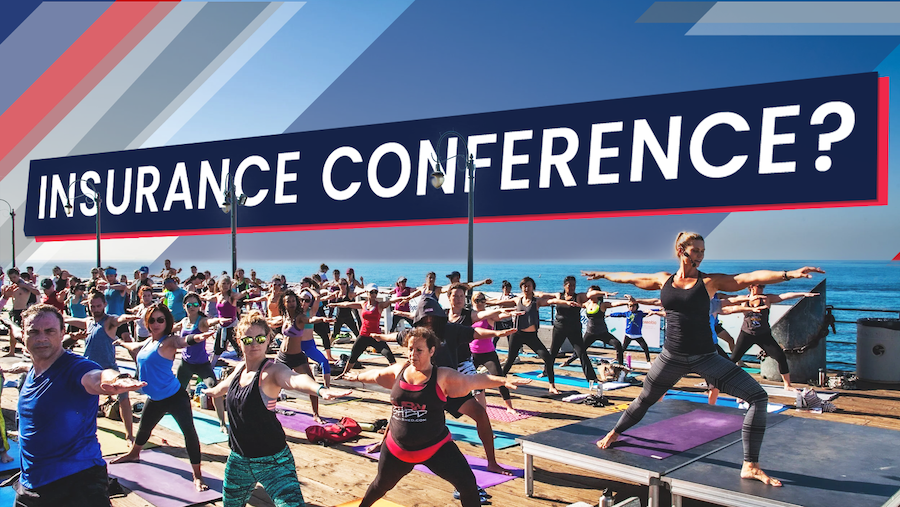
Insurance Professionals Trade the Ballroom for Yoga and Volleyball on Santa Monica Pier
Insurance professionals arrived at Santa Monica Pier expecting serious specialty-market conversations and found themselves starting the day with yoga and finishing it with volleyball.
InsuranceFest 2026 replaced the familiar hotel ballroom with ocean air, food trucks, mixology, music and activities designed to make professional networking feel less scripted. The July 16 gathering brought brokers, agents, carrier leaders, underwriters, risk managers, technology providers and other insurance professionals together in an environment that looked more like a summer festival than a traditional industry conference.
The unusual format attracted considerable interest. Organizer figures listed more than 1,700 registrations from approximately 1,000 companies, with attendees traveling from across the United States. More than half of the registrants reportedly held vice president-level positions or higher, showing that the casual setting was not limited to an early-career audience.
Yoga and volleyball made the event memorable, but the more important story is what happened between those activities. InsuranceFest tested whether removing some of the formality from an industry gathering could encourage better conversations, stronger relationships and more active participation.
A Conference Designed to Feel Different
Many insurance professionals know the conventional conference routine. Attendees move from a keynote presentation to a breakout room, collect materials from exhibitors and try to fit meaningful conversations into brief coffee breaks.
That structure can deliver valuable education, but it can also make networking feel transactional. People exchange business cards, repeat the same professional summaries and promise to reconnect after returning home. The challenge is turning those short encounters into relationships that survive beyond the event.
InsuranceFest approached the problem by changing the environment. The gathering included more than 80 speakers, five content areas and approximately 40 sessions, but it also created informal opportunities for attendees to interact while participating in activities, eating together or simply walking along the pier.
The organizers also offered more than 50 facilitated discussion tables. Instead of placing hundreds of attendees in rows facing a stage, these sessions brought smaller groups together to examine issues such as specialty placement, cyber risk, catastrophe exposure, claims, regulation, brokerage growth and professional development.
“After more than 600 conferences, I’d rank the networking and social interaction on the Santa Monica Pier in my top five.”
Jeff Kleid, Elite Risk Insurance
The Serious Work Beneath the Festival Atmosphere
It would be easy to treat beach volleyball and morning yoga as promotional extras. The event’s agenda, however, addressed issues with real consequences for agencies, carriers and clients.
Sessions explored difficult property placements, catastrophe-exposed accounts, cyber incidents, complex claims, changing distribution channels and the growing pressure on brokers to explain market conditions clearly. Other discussions focused on agency growth, talent development, acquisitions and the relationships among retail agents, wholesalers, managing general agents and carriers.
The combination matters because insurance problems rarely fit neatly into a lecture. A difficult account may involve underwriting appetite, capacity, loss control, pricing, claims experience and client communication at the same time. Professionals often learn as much from comparing experiences with one another as they do from a prepared presentation.
A small discussion table can give an agency leader the opportunity to ask how another firm handles coastal property submissions. A producer may discover a better way to prepare clients for renewal changes. A carrier representative may hear directly where underwriting requirements are creating confusion or slowing the placement process.
Those exchanges become more likely when attendees feel comfortable speaking honestly rather than waiting for a microphone during the final minutes of a panel.
Networking Is Not Separate From the Insurance Business
Insurance remains a relationship-driven industry even as quoting, servicing and policy administration become increasingly digital. Agents still need underwriters who understand unusual accounts. Carriers need distribution partners who can communicate appetite accurately. Clients need professionals who can explain complex coverage and market changes in practical language.
The U.S. Bureau of Labor Statistics identifies interpersonal skills as an important quality for insurance sales agents. It also projects approximately 47,000 openings for insurance sales agents each year through 2034, including positions created when experienced professionals retire or move into other occupations.
“Insurance sales agents must be able to establish trust in networking for prospective clients.”
U.S. Bureau of Labor Statistics
That trust is not developed only during sales calls. It is also built through professional communities where people share knowledge, make introductions, solve placement problems and learn which partners follow through when an account becomes difficult.
An event that helps people create those relationships is doing more than providing entertainment. It is strengthening part of the infrastructure through which insurance business is placed and serviced.
A Different Recruiting Message for the Industry
The festival format also addresses a persistent image problem. Insurance offers careers in sales, underwriting, claims, risk management, finance, operations, compliance and client service, yet people outside the industry may still picture repetitive office work and complicated policy documents.
An insurance event held on a pier sends a different signal. It shows an industry willing to experiment with how people learn, connect and advance professionally. That does not change the technical nature of the work, but it can make the professional community surrounding that work feel more accessible.
This is particularly relevant as agencies and carriers compete for younger employees. Recent insurance workforce research found that Generation Z represents about one-fifth of the workforce and places considerable value on learning, collaboration, growth opportunities and purposeful work.
Younger professionals do not necessarily need every workplace or industry event to resemble a festival. They do, however, want opportunities to participate, build genuine connections and understand how their work contributes to something larger than an individual task.
InsuranceFest included programming devoted to emerging professionals, personal branding, career development and cross-generational collaboration. Combining those conversations with an informal environment may make it easier for a newer employee to approach a senior executive, underwriter or agency owner who would otherwise feel inaccessible.
What Agencies Can Borrow From the Festival Format
An independent agency does not need to rent a pier or organize a volleyball tournament to apply the underlying ideas. The useful lesson is to create settings where people have a reason to interact beyond exchanging titles and contact information.
Agencies can bring some of that thinking into client events, carrier meetings, employee development and local association gatherings:
- Replace long presentations: Use shorter discussions followed by practical group exercises.
- Create small conversations: Organize tables around specific industries, risks or client challenges.
- Mix experience levels: Connect new producers with established agents and carrier partners.
- Add shared activities: Give attendees a natural reason to begin talking.
- Plan the follow-up: Assign clear next steps before everyone leaves.
These changes can be especially useful for agency meetings that include several departments. Producers, account managers and claims professionals may work on the same clients without having many opportunities to discuss what each group is seeing.
A facilitated conversation around a realistic account can reveal servicing problems, coverage gaps and communication opportunities that would not surface during a standard presentation.
Carriers Can Rethink Broker Engagement Too
For carriers, the event offers a reminder that broker engagement should involve more than presenting appetite guides and product information.
Agents want to know how underwriting decisions are made, which submissions receive the fastest attention and where a carrier sees opportunities. Underwriters benefit from hearing why clients resist certain requirements, how competitors are approaching an exposure and which parts of the application process create unnecessary work.
Smaller, candid conversations can uncover those details. They may also help carriers distinguish between a temporary complaint and a recurring distribution problem affecting multiple agencies.
A festival setting cannot resolve disagreements over pricing, capacity or underwriting appetite. It can create enough familiarity for agents and carriers to have more productive conversations when those disagreements arise later.
That relationship value is particularly important in specialty and excess and surplus markets, where unusual risks often require collaboration across several organizations before coverage can be secured.
Fun Still Needs a Business Purpose
There is also a caution for organizations tempted to copy only the visible parts of the event. Adding music, drinks or games does not automatically improve a conference.
Activities should make conversation easier rather than becoming distractions from the purpose of the gathering. Educational sessions still need knowledgeable speakers, useful subject matter and enough time for meaningful questions. Attendees also need accessible alternatives if they cannot or do not want to participate in a physical or alcohol-centered activity.
The strongest event designs give people several ways to engage. Someone may prefer a small discussion table, a structured meeting, a quiet conversation over lunch or an active group experience. Providing choices makes the event more inclusive while still preserving its distinctive atmosphere.
Follow-through is equally important. A conversation on a pier has limited value if no one records the idea, makes the promised introduction or schedules the next meeting. Agencies and carriers should treat post-event action as part of the event itself, not as an optional task left for the following week.
A Quirky Event With a Serious Message
The sight of insurance executives doing yoga beside the Pacific Ocean naturally makes for an unusual story. The larger takeaway is that the industry is reconsidering how professional relationships are formed.
Insurance professionals handle difficult subjects every day, from catastrophic losses and cyber incidents to lawsuits, disrupted businesses and families facing financial uncertainty. Serious work does not require every professional gathering to feel formal or impersonal.
By combining technical discussions with shared experiences, InsuranceFest gave attendees more opportunities to participate rather than simply observe. The format recognized that ideas move through an industry because people trust one another enough to ask questions, challenge assumptions and continue conversations after an event ends.
Yoga, mixology and volleyball may not become standard features at every insurance conference. Still, the gathering demonstrated that professional development can be useful, substantive and enjoyable at the same time.
For agents, agencies and carriers, that may be the most practical lesson from the pier: changing the setting can change the conversation, and changing the conversation can create relationships that eventually improve the business.