
2026 Midterm Elections: What’s at Stake for Health and Life Insurance?
The 2026 midterm elections could reshape the operating environment for health and life insurers, but the most important changes for agents, agencies, and carriers will depend on what elected officials do after the ballots are counted.
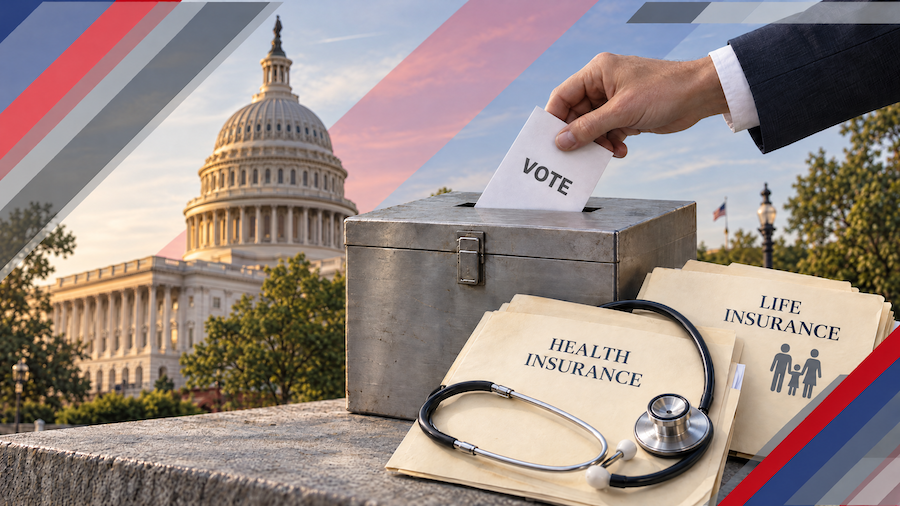
As Americans vote on November 3, health care affordability, public program spending, and the cost of protecting a family's financial future are intersecting with national politics. Control of Congress will influence which proposals advance, which face resistance, and how aggressively lawmakers oversee federal health agencies. At the same time, governor's races, state legislative contests, and elections for insurance commissioners could affect the rules insurers follow in individual states.
The distinction matters. An election result does not automatically change a policy, a premium, or an existing insurance contract. Legislation, appropriations, regulation, and state implementation take time. Nevertheless, the decisions made in the months following the election could alter coverage demand, distribution strategies, compliance costs, and consumer confidence across the country.
The Affordable Care Act Faces Another Affordability Test
For health insurers and agents selling individual coverage, the immediate concern is the affordability of Affordable Care Act marketplace plans. Enhanced federal premium tax credits expired at the end of 2025, leaving many consumers facing higher net premiums in 2026. The original, less generous premium tax credit structure remains available to eligible households, but it does not provide the same level of assistance.
The effects are already visible. An October 2026 analysis by KFF estimated that enrollment in the individual health insurance market declined by 18% between June 2025 and June 2026, falling from approximately 25.2 million to 20.5 million people. That measure includes both ACA marketplace plans and comparable off-exchange coverage. It is a market-wide warning sign, not proof that every disenrollment resulted from the subsidy change.
A Congress inclined to expand affordability assistance could revisit premium tax credits or other marketplace support. A Congress focused on spending restraint could favor narrower subsidies, different eligibility rules, or alternative coverage arrangements. Even if lawmakers agree that premiums are too high, they may disagree sharply on how to address them.
For agencies, the practical issue is retention. Clients may need help comparing monthly premiums against deductibles, provider networks, prescription formularies, and total exposure to out-of-pocket costs. Carriers, meanwhile, must assess whether changes in enrollment and the health profile of remaining members justify adjustments to product design, pricing, or geographic participation.
Medicaid Changes May Matter Before New Legislation Does
Some of the most significant post-election developments are already embedded in existing law. The 2025 federal budget reconciliation legislation established major changes to Medicaid eligibility and financing, including work requirements scheduled to begin January 1, 2027, for specified adult populations in affected states, subject to applicable implementation provisions and possible delays.
At enactment, the Congressional Budget Office estimated that the law's Medicaid provisions would reduce federal Medicaid spending by roughly $911 billion over the 2025 to 2034 period and increase the uninsured population by approximately 7.5 million by 2034. These are projections rather than observed outcomes, and they depend on how policies are implemented and how people respond.
The consequences reach well beyond Medicaid managed care organizations. Coverage interruptions can increase uncompensated care for hospitals, disrupt patients' relationships with providers, and create additional uncertainty for insurers contracting with health systems. People who lose Medicaid eligibility will not necessarily qualify for subsidized marketplace coverage, making accurate eligibility guidance essential.
New governors and legislatures will face decisions about administrative systems, outreach, state funding, and implementation priorities. Federal election results could eventually influence whether Congress revisits parts of the law, but agencies should not assume that a newly elected Congress can instantly suspend requirements already scheduled to take effect.
Medicare's Financial Outlook Remains a Bipartisan Pressure Point
Medicare is another major issue that will outlast election night. The 2026 Medicare Trustees Report projects depletion of the Hospital Insurance trust fund, which finances Medicare Part A, in 2033 under current law. At that point, continuing income is projected to cover approximately 89% of scheduled Part A expenditures unless policymakers intervene. That projection does not mean all Medicare coverage would end in 2033, and Parts B and D have different financing arrangements.
The pressure raises difficult choices involving program revenue, provider payments, payment accuracy, and long-term costs. The election could affect congressional oversight of Medicare Advantage, the design of prescription-drug policy, and the pace of reforms to prior authorization and plan accountability.
For Medicare-focused agencies, uncertainty is itself a business consideration. Beneficiaries often interpret proposals or political advertisements as immediate changes to their benefits. Agents can provide value by distinguishing enacted requirements from proposed legislation, confirming annual plan details, and explaining that coverage and costs must be evaluated against the client's actual needs.
State Elections Could Change Insurance Rules More Directly
Washington receives most of the attention, but insurance is regulated extensively at the state level. In 2026, California, Georgia, Kansas, and Oklahoma are electing insurance commissioners directly. Numerous governor's races also matter because governors or state-appointed bodies select insurance regulators in many other jurisdictions.
These offices can influence market conduct oversight, consumer protection enforcement, rate and form review where authorized, producer licensing administration, and regulatory approaches to emerging technologies. State legislatures may also change rules concerning pharmacy benefit arrangements, network adequacy, telehealth, or insurance disclosures.
For multi-state agencies and national carriers, the result can be a growing patchwork of requirements. A product, enrollment practice, or marketing process that works in one state may need modification in another. Election monitoring should therefore extend beyond federal races to the regulators and legislative committees that will oversee insurance locally.
Life Insurance Faces a Different Set of Election Effects
Unlike ACA marketplace coverage, private life insurance generally does not depend on annual federal premium subsidies. Its election exposure is more indirect, operating through household finances, tax policy, retirement planning, investment conditions, and state regulation.
Debates over federal taxes, estate planning provisions, retirement savings rules, and the long-term financing of Social Security can influence the conversations clients have about financial protection. Changes to tax law may affect the relative appeal of particular planning strategies, although the consequences depend on the final statutory language and individual circumstances.
Economic uncertainty also matters. Consumers facing higher health premiums or other household expenses may defer purchasing new life insurance, reduce desired coverage amounts, or review existing policies for affordability. At the same time, anxiety about family finances can increase interest in term coverage, permanent protection, and supplemental workplace benefits. Neither response should be assumed without understanding a client's budget and objectives.
Life carriers must also watch insurance department leadership, particularly where regulators are evaluating accelerated underwriting, the use of external consumer data, artificial intelligence governance, suitability, and sales practices. The 2026 Insurance Barometer Study from LIMRA and Life Happens underscores the continuing importance of consumer understanding and perceived need for life coverage. Election-driven policy changes may influence the market, but the basic protection gap remains an ongoing advisory opportunity.
Employer Benefits and Supplemental Coverage Could Feel the Ripple Effects
Employers sit at the intersection of health coverage costs and financial wellness. Shifts in federal health policy, hospital financing, or prescription-drug spending can eventually influence group plan budgets, contribution strategies, and employee benefits decisions. Those effects will differ by employer size, plan funding arrangement, geography, and renewal date.
When workers face higher out-of-pocket medical expenses, benefits teams may receive more questions about disability income, hospital indemnity, critical illness, and life insurance. These products can address particular financial risks, but they are not substitutes for comprehensive major medical coverage. Clear disclosures about exclusions, benefit triggers, and limitations remain essential.
What Insurance Professionals Should Watch After Election Day
The most useful response is neither to predict sweeping reform nor to dismiss the election as political noise. Agencies and carriers can translate potential policy changes into a disciplined monitoring plan.
- Congressional priorities: Track actual bills and funding measures affecting ACA subsidies, Medicare, Medicaid, and taxes.
- State regulatory leadership: Review commissioner appointments, insurance department agendas, and state legislative proposals.
- Client affordability: Monitor coverage lapses, renewal shopping, deductible changes, and requests for lower-cost alternatives.
- Carrier responses: Watch filings, network changes, service-area decisions, underwriting guidance, and distribution updates.
- Communication controls: Separate confirmed policy changes from campaign promises before updating scripts or client materials.
Scenario planning is especially helpful. Agencies can prepare client communications for several possible legislative outcomes without claiming that any one outcome is certain. Carriers can likewise test their assumptions against different enrollment, reimbursement, and regulatory pathways rather than relying on a single political forecast.
The Opportunity Is to Turn Uncertainty Into Useful Advice
The 2026 midterms will not deliver one uniform outcome for every segment of the insurance industry. Health insurers face immediate questions about affordability, public program enrollment, and provider economics. Life insurers face a more gradual combination of household financial pressures, retirement and tax policy considerations, and evolving state oversight.
For agents and agencies, the strongest position is to stay current without becoming speculative. Clients need to know what has actually changed, what might change next, and which coverage decisions require attention today. Carriers that provide timely, accurate guidance to their distribution partners can reduce confusion and strengthen trust during a period of political transition.
Regardless of who wins individual races, the underlying demand for financial security and access to care will remain. The organizations best positioned for the next policy cycle will be those that combine regulatory awareness with straightforward explanations, disciplined compliance, and advice grounded in each client's circumstances.