
When Cyclists Get Hit: Who Pays the Medical Bills, Lost Wages, and Other Costs?
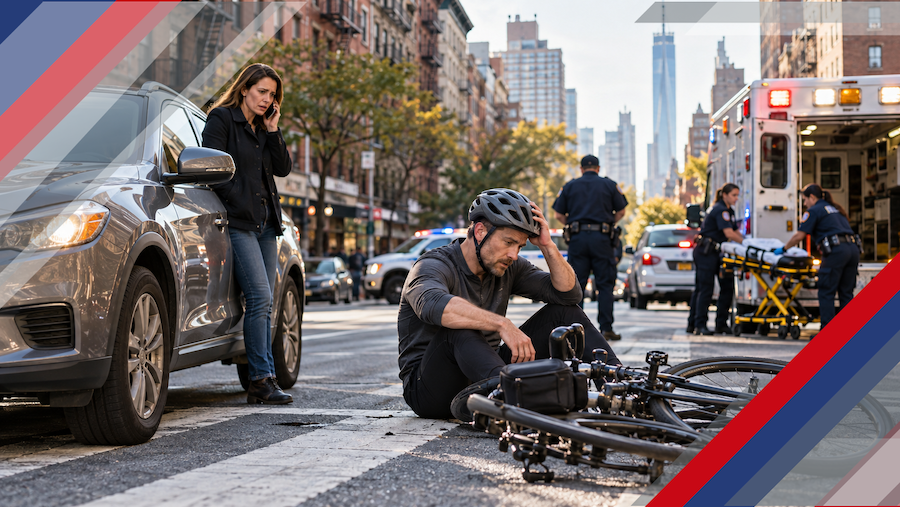
For cyclists injured in motor vehicle accidents, understanding which insurance policies provide financial protection, how to access those benefits, and which deadlines apply can make a substantial difference in their recovery.
A collision between a bicycle and a motor vehicle can create financial problems that extend well beyond the immediate injuries. Emergency treatment, rehabilitation, missed work, transportation expenses, and ongoing medical care can quickly place injured cyclists and their families under considerable financial pressure.
What many cyclists may not realize is that no-fault automobile insurance systems can provide financial benefits even when the injured person does not own a car or carry an automobile insurance policy. In some circumstances, coverage may also be available through a household member's policy or a state-established compensation program.
For insurance agents, agencies, and carriers, these situations illustrate the importance of understanding how automobile insurance responds to injuries involving people outside the insured vehicle.
No-Fault Insurance Protects Cyclists
For example, New York operates under a no-fault automobile insurance system designed to provide eligible accident victims with prompt access to certain economic benefits without first requiring them to establish who caused the collision.
Cyclists injured in qualifying collisions with motor vehicles are generally entitled to seek Personal Injury Protection (PIP) benefits through the insurer of the vehicle involved. The state's basic no-fault insurance requirement provides up to $50,000 per eligible injured person for covered economic losses.
Importantly, no-fault coverage is not restricted to individuals occupying automobiles. Pedestrians and bicyclists injured by covered motor vehicles can also qualify, even though they may have no relationship with the vehicle owner or insurer.
What Financial Benefits Are Available?
New York's basic no-fault benefits include several important forms of assistance:
- Medical expenses: Reasonable and necessary accident-related treatment, rehabilitation, and qualifying healthcare expenses, subject to applicable limits and fee schedules.
- Lost earnings: Generally 80% of lost work income, up to $2,000 per month for as long as three years, subject to applicable offsets.
- Additional expenses: Up to $25 per day for as long as one year for qualifying costs, including transportation to medical appointments and necessary household assistance.
- Death benefits: An additional $2,000 benefit payable to the estate of an eligible person who dies from injuries sustained in a covered motor vehicle accident.
These benefits are subject to statutory conditions and limits. The combined basic no-fault benefit remains subject to the $50,000 per-person limit, apart from the additional statutory death benefit.
The 30-Day Filing Deadline Can Determine Whether Benefits Are Paid
One of the most important requirements under New York's no-fault system is the deadline for submitting written notice of a claim. Regulation 68 generally requires eligible injured people to provide written notice to the appropriate no-fault insurer within 30 calendar days of the accident, as soon as reasonably practicable.
Late filing does not automatically eliminate coverage in every circumstance. An exception may apply when a claimant provides written proof establishing a clear and reasonable justification for the delay. Nevertheless, relying on an exception adds uncertainty to an already difficult situation.
Other deadlines govern medical bills, lost-earnings documentation, and requests for additional benefits. Agents and claims professionals can help injured clients by identifying the appropriate insurer and explaining the reporting requirements promptly.
When a Cyclist's Household Auto Insurance Policy Becomes Important
Normally, a cyclist struck by an insured motor vehicle would seek no-fault benefits from the insurer covering that vehicle. However, when the responsible vehicle is uninsured or cannot be identified, another potential coverage source may exist.
An automobile policy belonging to the cyclist or a qualifying family relative in the household may provide benefits, depending on the circumstances and policy provisions. This does not mean every household policy automatically covers every cyclist.
Uninsured Motorist Coverage Offers Another Layer of Protection
Uninsured motorist coverage may provide another route to recovery when a cyclist is legally entitled to damages from an uninsured or unidentified motorist. New York requires uninsured motorist bodily injury protection under automobile policies, subject to statutory and contractual conditions.
Unlike no-fault coverage, which addresses specified economic losses regardless of fault, uninsured motorist protection concerns damages the insured is legally entitled to recover. Eligibility for one does not automatically establish eligibility for the other.
When No Insurance Is Available, MVAIC May Provide a Safety Net
New York's Motor Vehicle Accident Indemnification Corporation (MVAIC) can assist certain qualifying victims of uninsured or hit-and-run motor vehicle accidents when no other applicable automobile coverage is available.
Claimants must satisfy the program's eligibility, residency, reporting, and filing rules. Potential coverage through a qualifying household family member can affect whether MVAIC will consider an application.
Hit-and-Run Reporting Deadlines Are Especially Important
For claims involving unidentified drivers, MVAIC generally requires an accident report to a police or peace officer within 24 hours. Published program requirements also include a 90-day Notice of Intention deadline for unidentified or hit-and-run vehicles and a 180-day deadline for identified uninsured vehicles.
These requirements are distinct from standard no-fault notification rules. A cyclist may not immediately appreciate the severity of an injury, making prompt documentation especially important.
Pain and Suffering Claims Operate Under Different Rules
New York's no-fault system does not automatically pay for pain and suffering. Recovering noneconomic damages in covered automobile accident cases generally requires proof of a serious injury as defined by state law, unless an applicable exception applies.
Serious injury categories include fractures, significant disfigurement, permanent consequential limitations, significant limitations of bodily function or system, and certain medically determined injuries that substantially restrict normal activities for the statutory period.
A cyclist can potentially receive no-fault payments without proving driver negligence. An additional liability-based claim generally raises separate questions about fault, injury thresholds, and damages. For carriers, these are related but distinct exposures.
E-Bikes Are Creating New Coverage Questions
Electric bicycles and other micromobility devices add complexity to accident claims because legal classification can determine which insurance rules apply.
New York recognizes three classes of bicycles with electric assist. Class 1 provides assistance while pedaling up to 20 miles per hour. Class 2 allows throttle assistance up to 20 miles per hour. Class 3 allows throttle-assisted propulsion up to 25 miles per hour and is permitted only in New York City. Qualifying devices must meet applicable requirements, including operable pedals and a motor rated below 750 watts.
Why Vehicle Classification Matters to Insurers
A rider on a legally qualifying electric bicycle injured by an automobile may be eligible for no-fault benefits. But a device marketed as an e-bike might instead be classified as a motorcycle, moped, or other motorized vehicle if its actual capabilities or specifications do not satisfy the statutory definition.
New York appellate cases have examined issues such as missing pedals, vehicle speeds, and the classification of motorized bicycles. The claims implications depend on the facts and applicable law, not merely the name used for the device.
A Developing Issue for Agencies and Carriers
Agents should distinguish medical benefits following collisions with automobiles from liability for injuries an e-bike rider causes to someone else. Homeowners, renters, auto, and specialized bicycle policies may address these exposures differently.
Policy language and vehicle classification deserve particular attention during underwriting and claims handling, especially when a motorized device has been modified.
What Happens When No-Fault Benefits Run Out?
A serious accident involving surgery, extended rehabilitation, or prolonged absence from work can generate expenses beyond the basic $50,000 no-fault limit. Insurers may offer Additional Personal Injury Protection, which can increase eligible benefits beyond that minimum.
When applicable coverage is exhausted, other possible resources may include health insurance, disability benefits, and liability-based recovery where legally appropriate. Coverage reviews can help consumers understand these distinctions before an accident occurs.
Why Bicycle Accident Coverage Matters to the Insurance Industry
Bicycle accident claims bring together automobile insurance, personal injury liability, household protection, and evolving transportation risks. For agents, the topic offers a chance to show clients how some auto policy benefits extend beyond the insured vehicle.
Agencies can use the discussion to examine uninsured motorist limits, additional PIP benefits, and potential household coverage gaps. Carriers must address eligibility, injury severity, medical expenses, reporting deadlines, and increasingly complex vehicle classifications.
Documentation Can Make a Significant Difference
Police reports, insurance information, photographs, medical records, employment documentation, and records of related expenses can all matter as a claim progresses. E-bike cases may also require specifications, classifications, and information about modifications.
Early collection and preservation of evidence can reduce uncertainty and help insurers and claimants resolve factual questions more efficiently.
The Broader Lesson: Coverage Awareness Before an Accident
Injured cyclists may have more potential insurance protection than they realize, but accessing it often depends on identifying the correct policy, proving eligibility, and meeting specific deadlines.
New York's no-fault system offers an important financial foundation, while household automobile policies, uninsured motorist coverage, optional benefits, and MVAIC can provide additional avenues under qualifying circumstances.
For agents and agencies, the opportunity is to educate clients before an accident puts their coverage to the test. For carriers, clearly defined policy provisions and timely, fair claims administration remain essential as bicycles and electric mobility become an increasingly familiar part of the transportation landscape.