
Alien Abduction Insurance Is Real, and It Has a Surprising Lesson for the Industry
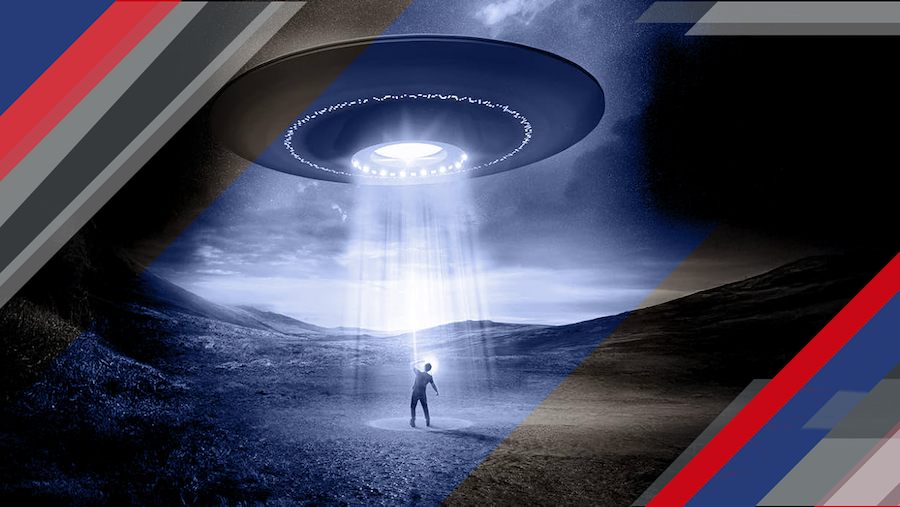
Alien abduction insurance may sound like the punchline to an insurance joke, but its staying power reveals something surprisingly serious about how people think about risk, uncertainty, and coverage.
For decades, novelty policies promising millions of dollars if extraterrestrials carry away the insured have attracted buyers, headlines, and plenty of raised eyebrows. One of the best-known examples comes from Florida, where Mike St. Lawrence began offering alien abduction coverage in 1987 and later said he had sold roughly 6,000 policies.
Nobody should confuse these products with the everyday homeowners, auto, commercial, life, or specialty policies agents place for clients. The better-known alien policies have been marketed largely with humor, unusual claims requirements, and payout structures that make their enormous advertised limits considerably less dramatic than they initially appear.
Still, look past the flying saucers and there is a genuinely useful insurance story here. Alien abduction insurance sits at the extreme edge of a much broader industry tradition: identifying unusual fears, defining a risk, writing terms around it, and figuring out whether somebody is willing to pay to transfer that uncertainty.
A $10 Million Policy With One Very Important Catch
The Florida offering became famous partly because of its irresistible numbers. St. Lawrence advertised lifetime alien abduction coverage with a $10 million benefit. At one point, a digital policy cost $19.95 and a mailed paper version cost $24.95. The offering included tongue-in-cheek provisions involving psychiatric care, family sarcasm, and other consequences of an alleged extraterrestrial encounter.
Then comes the fine print.
The $10 million benefit was structured to be paid at $1 per year for 10 million years. A claimant could also be asked for evidence such as information about the extraterrestrials, a UFO identification number, photographs, and even the signature of an authorized alien.
That is where a funny story becomes a perfect illustration of something agents explain every day: the headline limit is only one part of a policy. How coverage responds, what constitutes a covered event, what proof is required, and how benefits are paid can matter just as much as the number printed on the declarations page.
“I don't want to try to rip somebody off.”
Mike St. Lawrence, creator of the alien abduction policy
That comment may be the most important part of the entire story. St. Lawrence told reporters that when prospective buyers appeared to take the product seriously or did not understand its tongue-in-cheek nature, he would not sell it to them.
For insurance professionals, that is a surprisingly familiar principle wrapped in an absurd package: customer understanding matters.
Yes, People Actually Filed Claims
The story gets stranger. St. Lawrence said two policyholders eventually submitted alien abduction claims. One reportedly supplied photographs, while another presented an alleged implant and information about an examination of the object. St. Lawrence said he waived one of the more unusual proof requirements and began sending annual $1 payments on a claim.
That does not establish that an extraterrestrial abduction occurred. NASA currently says it has found no credible evidence of extraterrestrial life and no evidence that unidentified anomalous phenomena are extraterrestrial. NASA also emphasizes that limited high-quality observational data makes many UAP reports difficult to evaluate scientifically.
But from an insurance perspective, the interesting question is not whether aliens are visiting Earth. It is what happens when a covered event is difficult or impossible to verify objectively.
Insurance depends on definitions. A fire can be documented. A vehicle collision leaves physical evidence. Disability can be evaluated against medical and contractual criteria. A business interruption loss can be measured through records. The more ambiguous the trigger, the harder underwriting, pricing, reserving, and claims adjudication become.
The Real Issue Is Insurability
At its core, insurance is a mechanism for transferring and pooling risk. The National Association of Insurance Commissioners defines insurance as an economic device that transfers risk from an individual to a company and reduces uncertainty through pooling. It also defines insurable interest around the possibility that the insured can suffer a financial loss.
That framework helps explain why alien abduction coverage is more interesting as a thought experiment than as an actuarial exercise. Traditional insurance works best when an insurer can identify the exposure, estimate frequency and severity with reasonable discipline, define the event, verify losses, and price the transfer accordingly.
What an Underwriter Would Want to Know
- Frequency: Is there credible historical data showing how often the event occurs?
- Severity: What measurable financial loss would follow a covered event?
- Verification: Can an independent party determine whether the event actually happened?
- Pricing: Is there enough information to charge a premium proportional to the exposure?
- Accumulation: Could one event create thousands or millions of simultaneous claims?
Alien abduction performs poorly on nearly every one of those questions. But those same questions are exactly what the industry asks when confronting legitimate emerging risks.
Yesterday's Strange Risk Can Become Tomorrow's Specialty Market
This is where the novelty story becomes particularly relevant for agents, carriers, MGAs, program administrators, and specialty brokers.
Insurance has always stretched beyond standardized personal and commercial lines. The Insurance Information Institute notes that specialty markets encompass hundreds of forms of coverage for risks that do not fit comfortably inside common policies, ranging from professional niches to kidnap and ransom and special events coverage.
Risks that once sounded unusual can become significant markets when technology, economics, regulation, or customer behavior changes. Cyber insurance is an obvious example. So are coverages associated with digital assets, complex supply chains, cloud outages, artificial intelligence, and new forms of intangible property.
Lloyd's has explicitly built innovation programs around complex and non-standard exposures, including artificial intelligence, intangible assets, cryptocurrency, and parametric business interruption solutions. Its Product Innovation Facility was created with tens of millions of pounds of underwriting capacity before evolving into the Lloyd's Product Launchpad.
“Non-standard risks might require different thinking and expertise.”
Tina Kirby, Head of Innovation & Product Development at Beazley
That is the legitimate specialty-market version of the lesson hiding inside the alien insurance story. Insurance innovation frequently starts when somebody asks a question that initially sounds unusual: What new thing can go wrong, who would suffer financially if it did, and can we build a responsible mechanism for transferring that risk?
There Is Also a Marketing Lesson Here
Few consumers voluntarily tell their friends about an ordinary insurance policy. Alien abduction insurance is different. It is memorable, visual, funny, and almost impossible not to discuss.
That helps explain why a niche novelty product created decades ago continues resurfacing in news stories and conversations. When interest in Area 51 surged online in 2019, the alien policy suddenly had another cultural moment, decades after it had first been created.
Agencies obviously do not need extraterrestrial products to become interesting marketers. The larger lesson is that insurance becomes easier to talk about when it is attached to a vivid scenario.
Instead of telling a restaurant owner that business interruption coverage is important, talk through what happens after a kitchen fire shuts the doors for six weeks. Instead of describing cyber coverage in abstract language, ask what happens if ransomware locks every computer on Monday morning. Instead of simply presenting an umbrella limit, explain what a serious liability judgment could mean for a family's savings and future income.
Specific stories make invisible risks visible. Alien abduction insurance simply takes that principle to a spectacular extreme.
Novelty Cannot Replace Consumer Clarity
There is another side to creative insurance marketing, and it deserves attention.
A humorous product works only when the customer understands the joke. In mainstream insurance, where real homes, businesses, incomes, vehicles, and liabilities are at stake, unclear expectations can become serious coverage problems.
The difference between a memorable sales idea and a misleading one often comes down to whether the consumer understands exactly what has been purchased. Limits, exclusions, deductibles, waiting periods, triggers, sublimits, valuation provisions, and claims requirements are not administrative details. They determine what protection actually exists when a loss occurs.
For agencies, this reinforces the value of documentation and plain-language conversations. For carriers, it reinforces the importance of product design and understandable policy language. For anyone developing new products, it is a reminder that creativity works best when underwriting discipline and consumer expectations remain firmly attached to it.
The Bigger Opportunity for Insurance Professionals
The enduring fascination with alien abduction insurance says something encouraging about the industry. People are interested in risk. They are curious about the boundaries of what can be insured. And sometimes an unusual story opens the door to a much more valuable conversation.
For agents, that conversation might uncover exposures a client has never considered. For carriers and MGAs, it may highlight an underserved niche. For specialty underwriters, it may inspire a closer look at a risk that has become measurable because new data or technology now exists.
The goal is not to insure every imaginable event. Some risks cannot be measured responsibly, some cannot be verified, and some simply do not make economic sense. The skill is recognizing when an unusual exposure has crossed the line from curiosity into a legitimate financial problem that insurance can solve.
Alien abduction insurance will probably remain famous because it is strange. Its more lasting lesson, however, is entirely terrestrial: insurance has always been an industry built around asking what could happen next, deciding whether the risk can be understood, and finding creative ways to protect people when the answer is yes.