
The Shift in America's Labor Market: Rise of the Gig Economy and Insurance Implications
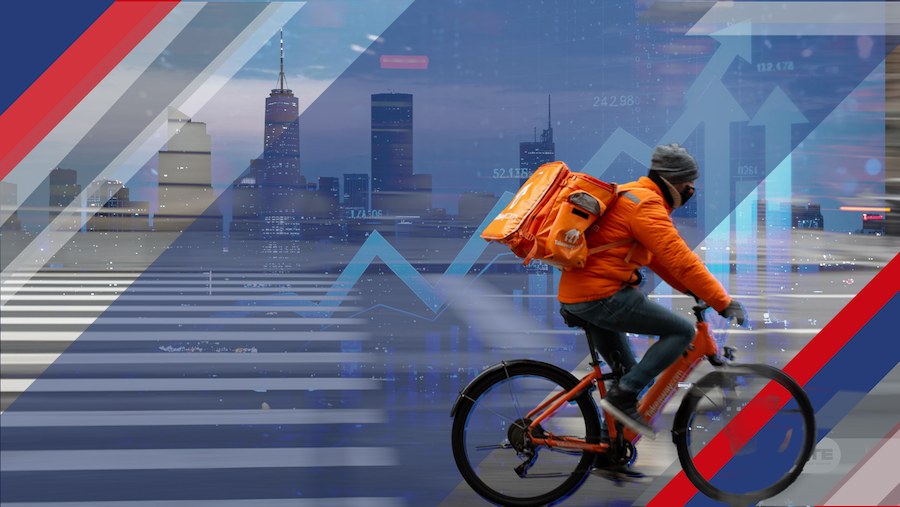
The side-hustle boom is becoming an insurance story, not just a labor-market story.
Millions of Americans are piecing together income from more than one job, and delivery work has become one of the clearest examples of that shift. For insurance agents, agencies, and carriers, the important question is not simply how many people are driving for an app. It is how quickly an ordinary personal-use vehicle can become a business-use exposure without anyone thinking to tell the insurer.
The latest labor data makes the trend hard to dismiss. U.S. nonfarm payroll employment declined by 23,000 in July 2026, while the unemployment rate held at 4.1%. At the same time, roughly 8.7 million Americans were multiple jobholders, representing 5.4% of employed people. July also brought an insurance-industry wrinkle: employment at insurance carriers and related businesses fell by 7,000. :contentReference[oaicite:0]{index=0}
Delivery Work Is at the Center of the Multiple-Job Economy
Indeed Hiring Lab found an even stronger pattern among people actively looking for work. By the end of 2025, nearly 16% of active Indeed job seekers already held multiple jobs. Delivery driver was the most common individual job title among those workers, accounting for nearly 5% of active multiple-jobholder profiles. :contentReference[oaicite:1]{index=1}
The platform economy itself is becoming more visible in employment histories. The share of Indeed profiles listing a gig-platform employer increased from roughly 0.5% in 2018 to more than 1.3% by 2026. That is about 2.6 times the earlier share, or roughly a 160% increase, not a 260% increase. Indeed also found that application activity surged before workers added a second job, suggesting that financial pressure is an important part of the story. :contentReference[oaicite:2]{index=2}
“If you can’t find a better job, find a second one.”
Cory Stahle, Indeed Hiring Lab :contentReference[oaicite:3]{index=3}
For insurers, that creates a practical challenge. The customer who bought a personal auto policy six months ago may still describe the vehicle as a commuter car, even though it now spends evenings transporting restaurant orders, groceries, or retail purchases. The insured may not view that as a material change. The policy language, underwriting rules, and claims process may view it very differently.
The Earnings Headline Does Not Tell the Whole Story
Gig work is attractive because it is accessible and flexible. A driver can often fit deliveries around a primary job, school schedule, caregiving responsibilities, or another source of income. But headline hourly earnings can be misleading when they are treated like an employee wage.
A delivery driver is supplying the vehicle, absorbing depreciation, buying fuel or electricity, replacing tires, maintaining brakes, paying insurance, and taking on additional road exposure. For perspective, the IRS business mileage rate for 2026 is 72.5 cents per mile. That rate is not a measurement of a particular driver's actual expenses, but it is a useful reminder that the cost of putting a personal vehicle to work extends well beyond the price at the pump. :contentReference[oaicite:4]{index=4}
That matters to agents because a side hustle that appears modest in income terms can still be significant in exposure terms. Ten or fifteen hours of weekly delivery work may add thousands of annual miles, more nighttime driving, more frequent stops, parking-lot activity, unfamiliar destinations, and greater interaction with pedestrians, cyclists, and congested urban streets.
Local Pay Rules Are Creating Different Gig Markets
Gig economics increasingly depend on location. Seattle has a dedicated App-Based Worker Minimum Payment Ordinance rather than relying only on the city's general minimum wage. The city's 2026 adjustments include minimum payment components of 47 cents per minute and 80 cents per mile, plus a $5.34 minimum per offer. A Seattle labor standards report covering the first 18 months of implementation found higher worker pay and a 3.2% increase in completed offers from the first half of 2024 to the first half of 2025. :contentReference[oaicite:5]{index=5}
New York City takes another approach. Covered restaurant and grocery delivery apps must currently pay workers at least $22.13 per hour, excluding tips, for qualifying time spent preparing for or making deliveries. The rate is scheduled to adjust annually. :contentReference[oaicite:6]{index=6}
For national carriers, those differences matter. Compensation rules can influence when drivers work, how long they remain connected to an app, which transportation modes they choose, and how platforms design their dispatch systems. Insurance products that treat gig activity as identical from one jurisdiction to another may miss meaningful differences in behavior and exposure.
The Coverage Gap Is Where the Insurance Conversation Gets Serious
DoorDash currently requires drivers using automobiles to maintain a valid driver's license and personal auto insurance. Its age requirements also vary by state: new applicants must be 21 in California, 19 in several states including Arizona and Texas, and at least 18 in the remaining states. :contentReference[oaicite:7]{index=7}
The bigger issue is what happens after the driver signs in. DoorDash's current U.S. insurance guidance generally provides third-party automobile liability protection with a $1 million combined limit while a driver is in “Active Status,” meaning after accepting a delivery request and until that delivery is completed, canceled, or unassigned. DoorDash says it generally provides no liability coverage during other periods, although state-specific rules and policy terms can differ. The company also states that damage to the driver's own vehicle is the driver's responsibility and should be addressed through the driver's auto insurer. :contentReference[oaicite:8]{index=8}
“A Dasher’s personal insurance policy may not provide coverage while providing delivery services.”
DoorDash Dasher Support :contentReference[oaicite:9]{index=9}
That single sentence should get every personal-lines professional's attention. The NAIC has also warned more broadly that personal auto coverage can contain business-use or for-hire restrictions, creating potential gaps when personal vehicles are used in the sharing economy. :contentReference[oaicite:10]{index=10}
| Driver Status | Coverage View | Agent Focus |
|---|---|---|
| Status: App is off and no delivery accepted. | Coverage: Personal auto typically governs, subject to policy terms. | Agent focus: Confirm business-use restrictions and available endorsements. |
| Status: App is on and driver awaits offers. | Coverage: Platform liability may not apply during waiting periods. | Agent focus: Identify potential gaps before delivery is accepted. |
| Status: Driver accepts request through completed or canceled delivery. | Coverage: Platform liability generally applies during active delivery status. | Agent focus: Review physical damage, exclusions, and state variations. |
The table is intentionally simplified. Actual coverage depends on the platform, state, policy form, endorsement, vehicle type, and facts of the claim. That complexity is precisely why a quick “Do you drive for Uber?” question is no longer enough.
Five Questions Every Agent Should Be Asking
A better annual review can uncover gig exposures before a claim does. The conversation does not need to sound like an underwriting interrogation. A few specific questions can surface most of the important issues:
- Do you use any household vehicle to earn money? Include food delivery, groceries, packages, rideshare, courier work, and similar activity.
- Which apps or companies do you work through? Different platforms provide different insurance protections and define active work periods differently.
- When is the vehicle actually working? Ask about waiting for requests, traveling to pickups, active deliveries, and returning afterward.
- How many miles are being added? Supplemental work can materially change annual mileage, territory, garaging patterns, and driving times.
- What protection do you expect if your own car is damaged? Third-party platform liability does not automatically mean physical damage protection for the driver's vehicle.
Documenting those answers is useful for coverage placement, underwriting communication, and agency E&O discipline. It also gives the customer a much clearer picture of who may pay when something goes wrong.
Carriers May Need to Look Beyond Annual Mileage
Traditional personal-auto underwriting often focuses heavily on mileage, household drivers, vehicle type, garaging territory, and prior losses. Gig work adds another dimension: the purpose and timing of those miles.
Two drivers can each travel 15,000 miles a year while presenting very different exposures. One may drive a predictable commute primarily during daylight hours. The other may make dozens of short evening trips, repeatedly enter busy parking lots, stop curbside, use navigation in unfamiliar neighborhoods, and spend significant time operating in dense pedestrian areas.
That creates opportunities for carriers to refine underwriting questions, design clearer delivery-use endorsements, and improve claims intake. One particularly important claims question is the driver's exact platform status at the moment of loss. Whether the app was off, waiting for an offer, or handling an accepted delivery can materially affect which policy responds.
Agencies Also Have an E&O Opportunity
Side hustles are a good reason to reconsider how agencies ask about vehicle use. A broad question such as “Is this vehicle used for business?” can produce a quick “no” from someone who does not consider delivering dinner for two hours on Saturday to be a business.
Specific examples work better. Asking about DoorDash, Uber Eats, Instacart, Amazon Flex, rideshare, package delivery, and other paid driving makes the exposure easier for customers to recognize. It also helps the agency demonstrate that material use questions were actually discussed rather than buried in an application field.
Automation Will Change the Exposure, Not Eliminate It
The delivery market is also becoming a laboratory for autonomous transportation. DoorDash currently offers drone delivery in selected markets through partners including Wing, Flytrex, and Manna. The company has also developed Dot, an electric autonomous delivery robot designed to operate as part of a broader system that can route deliveries among human Dashers, drones, and robotic vehicles. DoorDash and Wing expanded their drone delivery partnership into metro Atlanta in 2026. :contentReference[oaicite:11]{index=11}
For the insurance industry, that does not mean delivery risk disappears. It means the risk begins migrating. A human driver's personal-auto exposure may decrease on some trips while aviation liability, robotics, product liability, cyber risk, equipment damage, commercial auto, vendor management, and technology-related claims become more important.
Mixed delivery networks may be especially interesting. A restaurant order could be handled by a human driver in one neighborhood, a sidewalk robot in another, and a drone in a third. Determining responsibility after a loss may involve the delivery platform, technology provider, equipment owner, merchant, contractor, and potentially multiple insurance programs.
The Opportunity Is Bigger Than Selling a Gig Endorsement
For agencies, this trend creates a natural reason to deepen customer conversations. Someone starting delivery work may need an auto-policy review today, but the discussion can also uncover changes in umbrella needs, business activity, equipment, income protection, or other household exposures.
For carriers, the opportunity is to make coverage easier to understand. Gig workers should not need to become insurance technicians to determine whether they are protected during the ten minutes between finishing one delivery and accepting the next. Clearer policy language, state-specific education, better application questions, and appropriately priced endorsements can reduce uncertainty for policyholders and claims teams alike.
And for the broader industry, side hustles are another reminder that the line between personal and commercial risk keeps getting thinner. Homes operate as businesses. Personal vehicles generate income. Phones become dispatch systems. Individuals move in and out of commercial activity several times in a single afternoon.
A Side Hustle Can Be a Material Change in Risk
The economic story is straightforward: more workers are looking for additional ways to earn, and delivery work offers a relatively accessible path. The insurance story is more complicated. Every extra mile can introduce a different use classification, a different coverage period, a different set of exclusions, or a different party responsible for a loss.
Agents do not need to discourage customers from gig work, and carriers do not need to treat every side hustle like a full commercial fleet. The goal is simpler: identify the exposure, understand when personal and platform coverage begin and end, place the appropriate protection, and make sure the customer knows what to expect before an accident happens.
As side hustles become a more permanent feature of the American labor market, asking how a vehicle is used may become just as important as asking who drives it.