
The Fire Chief's Arson Conviction: The Pitkin Fraud Scheme Ends
A house fire can erase walls in minutes, but it can leave behind a remarkably detailed trail for investigators.
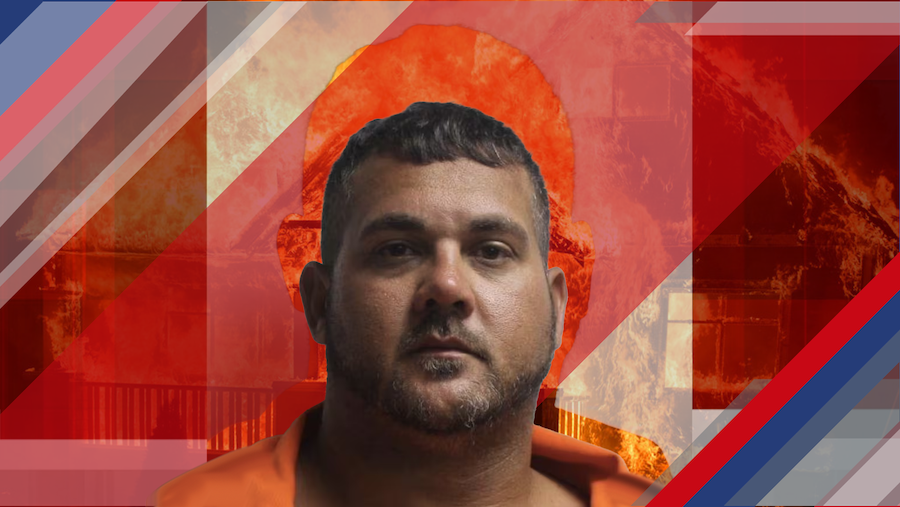
That trail is now at the center of an alleged insurance fraud scheme in Pitkin, Louisiana. According to the Louisiana Office of State Fire Marshal, the Plainview Fire Department responded to a residential fire in the 400 block of Hopewell Road at approximately 3 a.m. on February 24, 2026.
State fire investigators later determined that the blaze had been intentionally set. Authorities allege that the fire was connected to fraudulent insurance claims involving both the residence and a vehicle.
On July 30, investigators arrested 37-year-old Justin Ware on two counts of insurance fraud and one count of arson with intent to defraud. The charges are allegations, and Ware is presumed innocent unless proven guilty in court.
The Pitkin Case Is an Arrest, Not a Conviction
Accuracy matters in insurance reporting, especially when a criminal investigation is still developing. The official public record describes an arrest and pending charges, not a conviction. It also does not identify Ware as a fire chief.
That distinction is more than a legal technicality. Agents, carriers, and industry publications should avoid language that suggests guilt has already been established. Fraud investigations require careful documentation, but so does the way those investigations are communicated.
What has been established publicly is that investigators conducted an extensive inquiry before making the arrest. Their work reportedly included an examination of the fire scene, analysis of digital evidence, and interviews with witnesses.
“Investigators determined the fire had been intentionally set to support fraudulent insurance claims involving both the residence and a vehicle.”
Why This Case Matters Beyond One Property Claim
The alleged involvement of both a home and a vehicle makes this case particularly relevant for insurers. Fraud schemes do not always remain inside one policy, one claim file, or one line of business. Related losses can be reported through different channels, handled by different adjusters, and supported by separate sets of documents.
Without effective information sharing, each individual claim might appear plausible. The broader pattern may only emerge when property records, vehicle information, policy histories, communications, and claim timelines are reviewed together.
That is why connected data has become so important to modern fraud detection. A suspicious fire cannot be evaluated solely by looking at burned materials. Investigators may also need photographs, financial records, policy changes, mobile device information, vehicle records, prior claims, witness accounts, and communications before and after the loss.
The Pitkin investigation illustrates a basic reality of insurance fraud work: the physical scene may start the investigation, but the surrounding information often explains it.
The Arson Triangle Still Provides a Useful Framework
National Insurance Crime Bureau guidance encourages investigators examining a suspicious fire to evaluate what is commonly called the arson triangle. The framework does not prove that a policyholder committed fraud. It helps investigators organize facts and identify questions that may require additional work.
- Incendiary cause: Qualified experts determine whether accidental causes can be ruled out and whether the physical evidence supports an intentionally set fire.
- Motive: Investigators examine whether someone could receive a meaningful financial or personal benefit from the destruction of the property.
- Opportunity: Timelines, access records, witness statements, and digital evidence help establish who could have set or arranged the fire.
No single element should be treated as conclusive. Financial difficulty alone is not proof of fraud. Being away from a property is not proof of involvement. Increasing coverage is not automatically suspicious. Each fact must be tested against independent evidence and the complete circumstances of the claim.
Digital Evidence Is Changing Fire Investigations
The Louisiana investigation specifically referenced digital evidence analysis. That detail should stand out to claims leaders because digital information can help verify or challenge nearly every part of a reported loss timeline.
Mobile device activity may help establish locations and communications. Connected security systems can record alarms, entry events, camera footage, or changes in system status. Vehicle technology may capture location or operational data. Digital photographs can reveal when an image was created, while messages and online activity may provide context surrounding the loss.
This information can disappear quickly. Devices are replaced, recordings are overwritten, accounts are closed, and automated retention periods expire. Carriers need clear procedures for identifying potentially relevant digital evidence, preserving it lawfully, and involving qualified specialists when a claim warrants further review.
Where Agencies Can Strengthen the Record Before a Loss
Document Coverage Changes Clearly
A request to increase limits, add a vehicle, schedule valuable property, or change deductibles can be completely legitimate. The agency’s responsibility is not to assume the worst. It is to document the request, the client’s explanation, the valuation information provided, and the date the change became effective.
Good records can protect everyone. They can confirm that a policy change was routine and properly supported, or they can help a carrier understand the sequence of events if questions arise later.
Protect Application Integrity
Agents should verify property use, occupancy, ownership, condition, vehicle information, and other material facts at application and renewal. Incomplete answers and informal assumptions can create problems long before a questionable claim appears.
When clients do not know an answer, the record should reflect that additional verification is needed. A clean application process provides underwriters with better information and gives claims teams a more reliable starting point after a loss.
Preserve Ordinary Client Communications
Routine conversations can become important months later. Questions about vacancy, repairs, financial interests, vehicle ownership, or coverage limits may help explain what the insured knew and communicated before the incident.
Agency staff should follow established retention policies and avoid adding speculation to the file. Record what was asked, what was answered, and what documents were provided.
What Carriers Need When a Claim Becomes Questionable
A suspicious indicator should prompt disciplined review, not an automatic accusation. Early coordination among adjusters, special investigation units, origin and cause experts, legal counsel, and public authorities can prevent duplicated work and reduce the risk that evidence will be lost.
| Signal | Response |
|---|---|
| Timing conflict: Reported movements differ from device or witness records. | Preserve promptly: Secure records before routine retention periods expire. |
| Coverage change: Limits, vehicles, or endorsements shifted near loss date. | Verify context: Review requests, explanations, valuations, and effective dates. |
| Scene inconsistency: Physical evidence conflicts with the reported fire narrative. | Use experts: Coordinate origin, cause, engineering, and forensic review. |
| Claim overlap: Residence and vehicle losses share people or timing. | Connect files: Compare policy histories, inventories, payments, and prior claims. |
The goal is to build a reliable factual record. That means testing the insured’s account, verifying ownership and values, comparing statements across interviews, and examining whether the physical and digital evidence support the reported events.
Fraud Indicators Are Not Proof
This may be the most important operational lesson for agencies and carriers. Indicators are investigative tools. They should never be used by themselves to deny coverage, reduce a payment, or label a customer as dishonest.
A late-night fire, financial stress, recent policy activity, or an unusual absence from the property may justify additional questions. Those facts can also have innocent explanations. Investigators must independently verify what happened and apply the policy based on evidence.
“Since each claim is unique, each should be investigated on its own merit.”
That balanced approach protects the carrier from fraudulent losses while protecting legitimate customers from unfair treatment. It also reduces legal, regulatory, and reputational risk.
Collaboration Is the Industry’s Strongest Defense
The Pitkin case began with a local fire department asking the State Fire Marshal’s Fire Investigations Unit for assistance. From there, the investigation expanded across the physical scene, digital information, and witness interviews.
That progression is a useful model for insurance organizations. Frontline adjusters should know when to escalate. Special investigation units should have access to relevant claim and policy information. Underwriters and agents should maintain accurate historical records. Technical experts should be brought in before evidence deteriorates. Law enforcement referrals should follow company procedures and applicable reporting requirements.
No single person or department is likely to see the entire picture. Effective fraud detection depends on connecting observations from the fire scene with information held by agencies, carriers, vendors, experts, and public investigators.
The Practical Takeaway for Insurance Leaders
The alleged Pitkin scheme is not simply a story about an intentionally set fire. It is a reminder that property fraud can cross policies, involve multiple insured assets, and depend on a carefully constructed narrative.
The industry’s answer should not be blanket suspicion. It should be stronger applications, better documentation, connected claim systems, timely evidence preservation, trained investigators, and respectful cooperation with public authorities.
For agencies, that means treating recordkeeping as part of client protection. For carriers, it means giving claims professionals the tools and authority to examine inconsistencies without rushing to judgment. For everyone involved, it means remembering that fires destroy evidence, but they do not necessarily destroy the truth.