
FBI Warns of Fake Health Insurance Scams Leaving Families With Massive Medical Bills
A family can pay every premium on time, carry what looks like an insurance card, and still discover at the hospital that the coverage they trusted will not pay the bills.
That nightmare is at the center of a federal warning about deceptive medical insurance offers that have targeted consumers searching for more affordable health coverage. The schemes are especially dangerous because they do not always look like obvious fraud. They can involve polished websites, professional sales representatives, familiar insurance terminology, supposed provider networks, impressive discounts, and monthly payments that feel exactly like insurance premiums.
For agents, agencies, and carriers, the warning is bigger than another consumer scam story. It is a reminder that criminals and deceptive marketers increasingly operate inside the language, branding, lead-generation systems, and sales channels consumers associate with legitimate insurance.
The Coverage Looked Real Until Someone Needed It
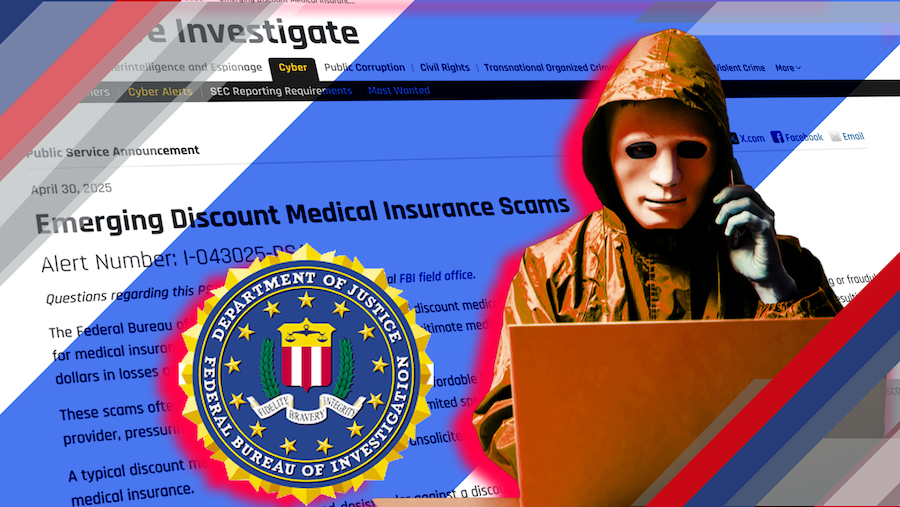
In an April 30, 2025 public service announcement, the FBI warned about discount medical insurance scams that promise lower rates on legitimate medical coverage but may provide little or no actual insurance protection.
One example involved a Pennsylvania couple who believed they were enrolling through a national provider. According to the FBI, the couple was pressured to make a quick decision because the discounted price supposedly would disappear if they waited.
Then came the moment that matters most in insurance: a claim.
After an emergency room visit and an appointment with their primary care physician, the couple received an explanation of benefits showing that the services were not covered. They were responsible for the medical bills themselves.
The FBI described another case involving a Maryland consumer who was promised substantial savings and coverage at his existing doctors and hospitals. After emergency surgery, he learned the hospital did not accept the plan, leaving him responsible for a $7,000 bill.
“Discount medical insurance scams involve misleading or fraudulent offers for medical insurance plans that promise reduced rates on legitimate medical insurance.”
This Is Bigger Than One Bad Sales Call
The FBI warning fits into a much broader enforcement picture. Federal and state regulators have documented operations in which consumers shopping for comprehensive health insurance instead received limited benefit products, discount memberships, bundled ancillary services, or products that were not insurance at all.
In Washington state, regulators reported more than 120 complaints connected with Quick Health and related operations, with consumers alleging more than $777,000 in collective harm. Complaints included misrepresented coverage, unauthorized bank charges, unpaid medical bills, and difficulty obtaining promised refunds.
One Washington consumer reportedly paid more than $47,000 over 14 months before learning, after her husband survived a heart attack, that the coverage they believed they had did not function as expected. Another family sought more than $20,000 in refunds along with reimbursement for approximately $55,000 in treatments and prescriptions paid out of pocket.
“It’s deeply disturbing when bad actors take such clear advantage of people.”
Federal Prosecutors Say the Model Can Operate at Scale
A related federal case illustrates how sophisticated these operations can become. In May 2025, federal prosecutors in Pennsylvania announced charges against four businessmen and two companies in an alleged nationwide telemarketing fraud scheme involving the Bene Market Group.
Prosecutors alleged that the operation ran a call center near Reading, Pennsylvania and collected tens of millions of dollars in commissions between 2018 and 2022. Consumers allegedly were told the organization was a national health insurance enrollment center that could shop dozens of highly rated carriers for comprehensive coverage.
According to the indictment, the operation instead sold a limited group of products with substantially narrower benefits, and some products were not insurance. Prosecutors alleged that tens of thousands of consumers were left without coverage for large portions of their medical, dental, and prescription expenses. Some allegedly accumulated medical debt reaching tens or hundreds of thousands of dollars.
The indictment also described practices familiar to anyone responsible for insurance compliance: misleading sales scripts, unlicensed sales personnel, multiple trade names, product bundling, policy flipping, omitted limitations, billing problems, altered call recordings, and delayed refunds. The allegations remain accusations unless proven in court.
Why the Threat Is Still Growing
The problem did not disappear after the FBI warning. In April 2026, the Federal Trade Commission took action against another alleged nationwide operation that regulators said impersonated government marketplaces and major insurance carriers while marketing supposedly comprehensive PPO coverage.
The FTC alleged that consumers were promised features such as low deductibles, inexpensive copays, prescription coverage, hospital benefits, and broad provider access. The products actually sold could include medical discount programs, ancillary products, or capped benefits, and some allegedly excluded hospital care entirely.
That distinction matters. A legitimate limited benefit plan or medical discount program is not automatically fraudulent. The danger arises when the customer is led to believe a limited product is comprehensive major medical insurance, or when material restrictions disappear inside a fast, high-pressure sales conversation.
Regulators are also paying attention to how consumers arrive at those sales calls. Lead generators, comparison websites, transferred calls, robocalls, and third-party marketing partners have all come under increasing scrutiny. In 2025, the FTC announced settlements totaling $145 million involving companies it accused of misleading consumers seeking health insurance and contributing to large volumes of telemarketing contacts.
The Insurance Industry Has a Trust Problem to Protect
Consumers rarely separate a fraudulent seller from the broader insurance industry as neatly as insurance professionals do. Someone who believed a caller represented a major carrier may remember only that an “insurance company” took their money and failed them.
That creates a reputational cost even for legitimate agents and carriers that had nothing to do with the transaction.
It also makes transparency a competitive advantage. A licensed agent who slows the conversation down, explains exactly what a product is, provides written documentation, identifies meaningful exclusions, and encourages the client to verify provider participation is doing more than meeting a compliance requirement. That agent is demonstrating what legitimate insurance advice looks like.
Five Controls Agencies Should Revisit Now
- Audit lead sources: Know how prospects were acquired and what advertising they saw before reaching your agency.
- Review sales language: Eliminate unsupported claims involving government affiliation, guaranteed savings, nationwide networks, or expiring discounts.
- Clarify product type: State plainly whether coverage is major medical insurance, limited benefit insurance, or a discount program.
- Verify licensing: Confirm producers, vendors, and entities hold appropriate authority in every state where business is conducted.
- Watch complaint patterns: Treat refund disputes, provider rejection, billing complaints, and coverage confusion as early compliance signals.
Carriers Have a Brand Protection Role Too
Carrier names carry enormous credibility. That makes them useful tools for imposters.
Carriers should monitor complaints, digital advertising, call-center activity, and unauthorized uses of their names or logos. A sudden cluster of consumers asking about policies that do not exist can be an early warning that a brand is being used to support deceptive sales.
Distribution oversight matters as well. When legitimate products travel through multiple marketing organizations, lead vendors, agencies, call centers, and independent producers, every additional handoff creates another place where messaging can drift away from the actual contract.
The strongest carrier relationships make clear not only what may be sold, but how it may be described.
The Most Dangerous Phrase May Be “Act Now”
Pressure is a recurring feature across the cases regulators have described. Consumers are told a discount is temporary, enrollment is closing, a special rate is disappearing, or they must immediately replace their existing plan.
Legitimate insurance does involve real deadlines. Open enrollment periods, effective dates, qualifying events, and underwriting rules can create genuine urgency. The difference is that legitimate urgency can be explained and documented.
Manufactured urgency is designed to prevent the customer from asking the questions that would expose the sale.
Can I see the policy documents? Who is the actual insurer? Is this comprehensive health insurance? Does my hospital participate? What are the exclusions? Is there an annual out-of-pocket maximum? Is the salesperson licensed in my state?
Those are not inconvenient questions. They are exactly the questions professional agents should want customers to ask.
Agents Can Turn the Warning Into a Client Conversation
This issue gives independent agents and benefits professionals a timely reason to communicate with clients, particularly individuals buying coverage outside an employer plan.
The message does not need to be alarmist. A simple reminder that clients should be cautious about unsolicited insurance calls, unusually steep discounts, demands for large upfront payments, vague carrier identities, and promises of government affiliation can prevent significant financial harm.
Agents can also remind clients never to cancel existing health insurance based solely on a salesperson's promise that a replacement policy has been secured. The new coverage should be verified, policy documents reviewed, effective dates confirmed, and provider participation checked before an existing plan is terminated whenever circumstances allow.
That conversation reinforces something fraudsters cannot easily replicate: an ongoing advisory relationship with someone the client knows and can contact when something does not make sense.
Insurance Only Works When the Promise Is Real
Insurance is an unusual product because the customer may not discover whether the promise works until months or years after the purchase. A homeowner learns at the fire. A family learns after the crash. A health insurance customer may learn in an emergency room.
That delay between purchase and proof is exactly what makes deceptive health coverage so damaging.
The FBI warning, the Pennsylvania prosecution, state regulatory actions, and continued FTC enforcement all point to the same lesson for the industry: transparency at the point of sale is not paperwork. It is the product.
For legitimate agents, agencies, and carriers, the best response is to make the contrast unmistakable. Verify the product. Verify the seller. Explain the limitations. Document the conversation. Scrutinize the lead source. Give consumers enough information and enough time to understand what they are actually buying.
Because when a family reaches the hospital, the insurance card in their wallet should represent more than a monthly payment. It should represent a promise that was clearly explained, legitimately sold, and built to be there when it matters.