
Does This Policy Cover Murder?” Inside the Chilling $4.3 Million Life Insurance Fraud Scheme
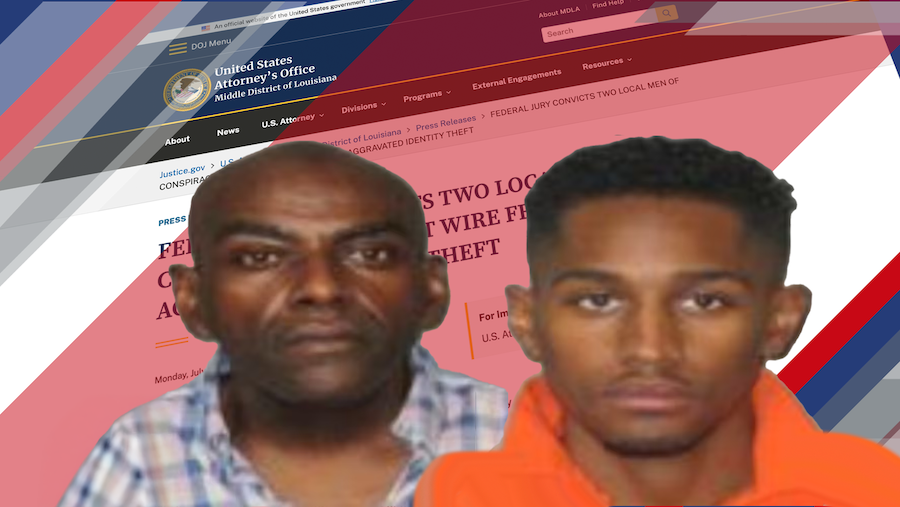
Does This Policy Cover Murder? What a $4.325 Million Fraud Case Teaches the Life Insurance Industry.
A Tragedy Followed by a Disturbing Paper Trail
When Duquares Smith was fatally shot in Baton Rouge in December 2022, his family was left grieving and investigators were left searching for answers. What emerged around his death was not only a homicide investigation, but also a trail of life insurance applications, unfamiliar companies, questionable business relationships and millions of dollars in coverage.
Federal prosecutors said Calvin Kemp and Chevez Tywan Robillard had used the identities of Smith and two other people without their knowledge to apply for life and accidental death insurance. The applications portrayed the victims as recording artists, contract lyricists, music executives and leaders of production companies.
By the time the scheme was uncovered, nine policies with a combined face value of $4.325 million had been obtained through eight insurance providers. Robillard was named as the sole beneficiary on the policies, and he later submitted claims on four policies issued in the name of the victim who had been murdered.
In July 2026, a federal jury unanimously convicted Kemp and Robillard of conspiracy to commit wire fraud and multiple counts of aggravated identity theft. Kemp faced a potential federal prison sentence of up to 26 years, while Robillard faced up to 24 years. The federal prosecution focused on the insurance and identity theft scheme. Neither man was charged in that case with committing the homicide.
“Does this policy cover murder?”
Calvin Kemp, during an insurance application call described in court reporting
How the Alleged Business Story Created a Cover Story
The scheme was designed to look like a legitimate commercial insurance arrangement. Kemp and Robillard registered companies with the Louisiana Secretary of State and opened a business bank account identifying themselves as company officers. Prosecutors said the companies did not conduct actual business.
That distinction matters. Business-owned life insurance and key person coverage are legitimate and valuable planning tools. A company may have a genuine financial interest in the continued life of an owner, executive, revenue producer or employee with specialized knowledge. Properly structured coverage can help fund succession plans, replace lost revenue, protect credit arrangements or finance a buy-sell agreement.
A business name, however, does not prove a business relationship. Entity registration is only one piece of evidence. Underwriters still need to understand what the company does, how long it has operated, how the insured contributes to its financial success, why the requested amount is reasonable and why the proposed beneficiary would experience a measurable loss.
The Louisiana case demonstrates how a fraudulent applicant can build a convincing surface narrative from individually ordinary details. A registered entity, a business checking account, a creative-industry occupation and a beneficiary described as an executive may each appear plausible. The risk becomes clearer when those details are examined together.
The Coverage Question Behind the Headline
Does Life Insurance Cover a Homicide?
A standard life insurance policy is generally designed to pay when the insured dies while the policy is in force. Homicide is not automatically excluded simply because the death resulted from a criminal act. The actual outcome depends on the policy, the application, applicable state law and the circumstances surrounding the death.
That does not mean a person can arrange an insured’s death and collect the proceeds. State slayer laws generally prevent someone who intentionally and unlawfully kills an insured from benefiting from the death. Depending on the beneficiary structure and state law, proceeds may instead become payable to an innocent contingent beneficiary or the insured’s estate.
Fraud Can Defeat the Claim Before the Cause of Death Is Reached
The more immediate issue in this case was whether valid policies had been created at all. Applications allegedly relied on stolen identities, impersonated applicants, false occupations, sham business relationships and a beneficiary arrangement unknown to the insureds.
Life insurance generally requires an insurable interest when coverage is procured on another person. State requirements vary, but the principle is intended to prevent life insurance from becoming a wager on the death of a stranger. Consent, ownership, beneficiary rights and insurable interest should never be treated as administrative formalities.
Material misrepresentations may also allow a carrier to contest or rescind coverage, particularly when a death occurs during the policy’s contestability period. That period is an opportunity to investigate the accuracy of the application. It is not an automatic reason to deny a claim, but it makes complete documentation and disciplined review especially important.
Accidental Death Coverage Requires Its Own Review
Accidental death benefits should be analyzed separately from basic life coverage. Policy definitions, exclusions and jurisdictional interpretations can affect whether a homicide is considered accidental from the insured’s perspective. Claims professionals must evaluate the exact contract language rather than relying on a general assumption that every violent death produces the same coverage result.
The Red Flags Were Not Confined to One Department
One of the most important lessons is that sophisticated fraud rarely announces itself through a single dramatic inconsistency. It often appears as a series of small irregularities distributed across sales, underwriting, customer service, banking, policy administration and claims.
In this case, the unusual question about murder was striking, but the broader pattern mattered more. Multiple policies were pursued across several carriers. The same beneficiary appeared repeatedly. Third parties handled communications. Recently formed companies supported the financial narrative. Premiums flowed through a business account. The claimed occupations and business relationships were difficult to verify.
Warning Signs for Agents, Underwriters and Carriers
- Applicant access: A third party controls nearly every conversation with the insured.
- Beneficiary mismatch: The beneficiary lacks a clearly documented family or financial relationship.
- Policy velocity: Several applications are submitted to different carriers within a short period.
- Coverage inflation: Requested limits exceed the applicant’s documented income or economic value.
- Premium disconnect: Payments come from an unfamiliar company or unrelated third party.
- Thin business history: A newly registered entity has little evidence of real operations.
- Identity inconsistency: Voices, signatures, addresses or contact details change between interactions.
- Unusual questioning: The caller focuses on homicide, exclusions or rapid claim eligibility.
None of these facts necessarily proves fraud on its own. A legitimate policy may involve a business beneficiary, third-party premium payer or newly established company. The concern is the combination of factors and the absence of a credible explanation supported by independent evidence.
Agents and Agencies Are an Essential Line of Defense
Agents are often in the best position to recognize when the person driving a transaction is not the person whose life will be insured. A producer may hear uncertainty in an applicant’s answers, notice that another person is supplying every detail or discover that the proposed insured does not understand the requested amount or beneficiary designation.
The appropriate response is not to conduct a private criminal investigation. It is to slow the process down, document the concern and follow the agency’s escalation procedures. The insured should be contacted through independently verified information, not only through a phone number or email address supplied by the person arranging the coverage.
Agents should also explain ownership and beneficiary designations in plain language. The proposed insured should understand who owns the policy, who can make changes, who will receive the proceeds and who is paying the premium. Those conversations support informed consent while also creating a record that can protect the client, agency and carrier.
Agency leaders can reinforce this work through practical training. Fraud education should include real scenarios involving identity theft, third-party premium funding, business-owned coverage, beneficiary manipulation and application impersonation. Staff members should know exactly where to report concerns without fearing that they are inconveniencing a client or jeopardizing a sale.
Where Carrier Controls Can Become Stronger
Connect the Application to a Real Person
Identity verification should extend beyond knowledge-based questions that may be answered using stolen personal information. Direct confirmation, device intelligence, document authentication and consistent contact information can provide a stronger picture of whether the proposed insured is participating voluntarily.
Recorded calls remain valuable, especially when carriers preserve them in a searchable form. Voice differences, scripted responses, background coaching and repeated callers can become important evidence when an application is later reviewed.
Validate the Business Purpose
When a business will own the policy, pay the premium or receive the proceeds, the underwriting file should clearly explain the economic relationship. Verification may include operational history, ownership records, payroll information, tax documents, contracts and evidence of the insured’s contribution to the organization.
Coverage amounts should also align with a defensible financial need. A vague claim that someone is an artist, executive, consultant or key employee should not substitute for documented compensation, ownership value, revenue contribution or contractual obligations.
Follow the Money
Premium funding can reveal relationships that the application does not. Carriers should understand why a third party is paying, whether the payment source matches the disclosed owner and whether one account is funding policies on several unrelated lives.
A shell company can make payments appear organized and professional. That appearance should not discourage further review when the entity has no employees, revenue, physical operations or credible connection to the insured.
Look Beyond a Single Policy
Fraudsters often exploit fragmentation. One application for a moderate amount may fit within automated limits at one carrier. Nine policies placed across eight providers create a very different risk profile.
Internal analytics, industry data, replacement checks and application activity indicators can help identify policy stacking and unusual submission velocity. The goal is not to block legitimate consumers who shop among carriers. It is to recognize when aggregate activity conflicts with the financial story presented to each company.
Escalate Early-Duration Death Claims Thoughtfully
A death soon after policy issuance deserves careful review, especially when the cause is homicide, several policies exist or the beneficiary relationship is unclear. Claims, underwriting, legal and special investigations teams should share information early rather than working in isolation.
Investigators may need to compare application recordings, signatures, premium records, device data, business filings and communications with the proposed insured. Carriers must balance fraud prevention with compassionate treatment of legitimate beneficiaries, who may already be navigating shock, grief and financial uncertainty.
The Human Cost Is Larger Than the Attempted Payout
Insurance fraud is often discussed through financial losses, operational expenses and premium pressure. Those consequences are real, but this case also shows how identity-based life insurance fraud can violate something much more personal.
Someone’s name, occupation and life story were allegedly rewritten to create a financial interest in that person’s death. The victims did not simply lose control of identifying information. They were unknowingly placed at the center of contracts that assigned millions of dollars of value to their deaths.
“You trusted the wrong people. I’m sorry.”
Latina Maxie, mother of Duquares Smith, speaking about her son
That human dimension should shape how agencies and carriers respond when identity theft is discovered. Affected individuals may need clear explanations, confirmation that fraudulent policies have been addressed and guidance on protecting their personal information. Communications should avoid making victims feel responsible for a scheme committed in their names.
The Real Lesson for the Insurance Industry
The Louisiana convictions are not evidence that the life insurance system failed at every level. Claims were challenged, investigators followed the financial trail, law enforcement built a case and a jury reached a verdict. The outcome demonstrates that established controls can work.
It also shows why no single control is enough. Identity verification without beneficiary review can miss the motive. Beneficiary review without premium analysis can miss the financial network. Entity verification without operational validation can mistake a registered shell for a functioning business. A claims investigation without access to application recordings can lose valuable context.
For agents and agencies, the practical message is to remain curious when a transaction feels controlled by someone other than the insured. For carriers, it is to connect information across applications, policies, payment sources and claims. For the industry as a whole, it is to remember why insurable interest, informed consent and careful beneficiary review exist.
Life insurance is built to protect people from financial loss after a death. Every safeguard that keeps it from becoming a financial incentive for a stranger protects more than a carrier’s balance sheet. It protects the purpose and trust at the heart of the product.