
Hambone Awards: Red Velvet Cake, a Vintage Drum and the Pet Insurance Claims Agents Won’t Forget
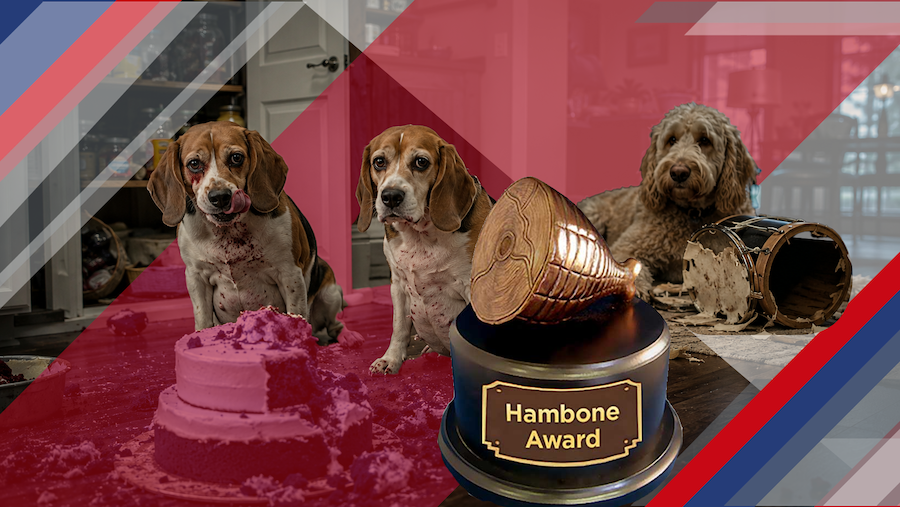
A pair of Beagles stole a two-tier red velvet cake, while a Texas Goldendoodle turned a vintage Ugandan drum into an emergency veterinary procedure.
The 2026 Hambone Award Turns Pet Mischief Into an Insurance Lesson
Nationwide’s 18th annual Hambone Award is once again putting a lighthearted spotlight on a serious insurance reality: pets have a remarkable ability to turn ordinary household moments into expensive, emotionally charged emergencies. The 2026 competition features nine finalists whose adventures range from eating inappropriate objects and medications to surviving accidents and an extraordinary 72 days lost in the wilderness. Every nominated pet ultimately made a full recovery and received reimbursement for eligible veterinary expenses under a Nationwide pet insurance policy. :contentReference[oaicite:0]{index=0}
For agents, agencies and carriers, the entertaining stories offer something more valuable than a few memorable anecdotes. They demonstrate exactly why specialty products such as pet insurance can create unusually strong connections with customers. When a policy helps someone say yes to veterinary treatment without making the financial decision the center of the crisis, insurance becomes tangible in a very personal way.
And the market surrounding those conversations continues to grow. The North American Pet Health Insurance Association reported that 7.6 million pets were insured across the United States and Canada at the end of 2025, up 8.5% from 7.03 million a year earlier. Gross written premium reached approximately $6.2 billion, with premium growth of 19.4% from 2024 to 2025. :contentReference[oaicite:1]{index=1}
“We’re proud that Nationwide could provide financial peace of mind during a stressful time.”
The Red Velvet Heist: When Silence Means Trouble
Diesel and Matilda, two Beagles in Arizona, provide perhaps the most relatable entry in this year’s field. Their owner, Kristilyn, already knew she was living with two accomplished food thieves. After hosting a party, the family placed the remains of a large, two-tier red velvet cake inside a closed pantry. The following day, Diesel and Matilda found their way inside and ate nearly the entire thing.
Their owner knew something was wrong for the simple reason that the house had become suspiciously quiet. She soon found the pair emerging from the pantry with dramatically swollen stomachs. Both dogs were taken promptly to a veterinarian and recovered after treatment. According to Nationwide’s account, the experience apparently did little to reform them. After returning home, they headed straight back toward the pantry to check whether anything remained. :contentReference[oaicite:3]{index=3}
The humor makes the story memorable, but the insurance lesson is straightforward. Ingestion claims can develop without warning, often in a home that an owner reasonably believes has already been pet-proofed. Food, medications, toys, household items and discarded objects can all become exposures once a determined dog gets involved.
That creates an opportunity for agents to move the conversation beyond, “Do you want pet insurance?” A better discussion is, “If your dog gets into something tonight and the emergency veterinarian recommends immediate treatment, what would you want your financial options to look like?” That question connects coverage to a real decision rather than an abstract product.
“Not once have we had to worry about paying for unexpected vet bills.”
Hampden’s Drum Solo: A Half-Hour Delay, Then Surgery
Hampden, an 85-pound Goldendoodle in Texas, found an entirely different route to Hambone fame. His family returned home roughly 30 minutes later than usual one evening, delaying his dinner. Hampden responded by destroying a vintage Ugandan drum that had been in the home for years and swallowing its hide covering.
At the veterinary hospital, imaging revealed what his owner described as roughly half a drum sitting in his stomach. Treatment successfully removed the material, and Hampden made a complete recovery. His owner, Alex, said the presence of insurance made her feel more confident taking him for veterinary care because the invoice itself did not have to dominate the decision. :contentReference[oaicite:5]{index=5}
That last point deserves attention from insurance professionals. The strongest value proposition for many specialty products is not simply reimbursement after something goes wrong. It is the confidence a customer has while deciding what to do next.
A policy that helps remove hesitation from a stressful decision can generate a level of loyalty that is difficult to create through price alone. The claim becomes a story the customer remembers, tells friends about and associates with the value of being insured.
The Other Finalists Show How Broad the Exposure Can Be
The remaining Hambone nominees reinforce how varied pet emergencies can be. The claims are not variations on one predictable accident. They involve ingestion, trauma, medication, environmental hazards and lost-pet recovery. Nationwide’s 2026 finalists include the following: :contentReference[oaicite:6]{index=6}
- Capone: A Bernedoodle swallowed pieces of a shredded baseball cover.
- Henry: A Labrador chasing a ball impaled his paw on a rake prong.
- Hobbes: A cat became trapped beneath a closing garage door.
- Lilliya and Noelle: Two Borzois consumed an entire bottle of flavored prescription medication.
- Lulu: A mixed-breed dog fell onto a metal candle holder while watching squirrels.
- Milo Bear: A Golden Retriever disappeared near Lake Tahoe and survived 72 days before being reunited with his family.
- Rolly: A Standard Poodle became seriously ill after eating a dead iguana.
Taken together, these cases illustrate an important point for agents: pet health risk is not limited to chronic illness or predictable veterinary care. It can emerge from behavior, environment, curiosity, accidents and pure bad luck.
Pet Insurance Is Becoming a More Important Specialty Conversation
The Hambone Award began with another unlikely claim. It was named for a Nationwide-insured dog that became trapped inside a refrigerator, ate an entire holiday ham while waiting to be discovered and was eventually found with a cleaned ham bone and a mild case of hypothermia. The dog recovered, and the story became the foundation for an award built around unusual pet claims. :contentReference[oaicite:7]{index=7}
The industry around those claims has changed substantially. NAPHIA now describes a North American marketplace of roughly 30 pet insurance companies, with a number of those organizations supporting multiple white-label or co-branded products. :contentReference[oaicite:8]{index=8}
That growth means agencies increasingly have an opportunity to treat pet insurance as part of a broader personal risk conversation rather than a novelty add-on. A client may carefully insure a house, two vehicles, jewelry and an umbrella exposure while having no financial plan for an emergency involving the animal sleeping at the foot of the bed every night.
Veterinary affordability also matters. The American Veterinary Medical Association has highlighted growing consumer sensitivity to veterinary prices and recognizes that obtaining needed veterinary care can present financial challenges for pet owners. :contentReference[oaicite:9]{index=9}
For agencies, that creates a natural protection conversation. It does not require predicting exactly what a future veterinary bill will cost. It simply requires acknowledging that unexpected care can create a meaningful household expense at precisely the moment when emotions are already running high.
Agents Can Sell the Decision-Making Freedom, Not Just the Policy
Pet insurance discussions often get pulled quickly into premiums, deductibles, reimbursement percentages and exclusions. Those details matter, and agents should explain them carefully. Waiting periods, pre-existing condition limitations, deductibles, coinsurance and other policy terms can materially affect coverage and reimbursement. Nationwide itself notes that eligibility and reimbursement remain subject to the applicable policy terms. :contentReference[oaicite:10]{index=10}
But product mechanics should not be the entire conversation. The emotional benefit is simpler: when a veterinarian recommends treatment, owners want to focus on what their pet needs rather than wondering whether they can absorb the entire cost today.
That framing is particularly useful because agents should never imply that pet insurance eliminates every veterinary expense. Instead, the value is risk transfer. The client retains some responsibility, but an eligible major event may no longer have to be funded entirely from household savings or credit.
For Carriers, These Claims Are Also Product Experience Tests
The Hambone stories provide a useful reminder for carriers as well. Specialty insurance succeeds or fails in moments that rarely resemble a clean product brochure. The customer may be sitting in an emergency veterinary clinic late at night, frightened, tired and trying to understand what happens next.
That is why surrounding services can matter alongside the insurance contract itself. In several 2026 finalist stories, owners contacted Nationwide’s veterinary telehealth service for guidance before obtaining care. The service is separate from the insurance coverage and subject to applicable limitations, but the claims demonstrate how triage support can become part of the broader customer experience. :contentReference[oaicite:11]{index=11}
From a carrier perspective, the customer is likely to remember whether help was easy to access, whether policy expectations were clear, whether reimbursement was understandable and whether the process reduced or added stress. Claims experience in an emotionally sensitive product line can shape retention just as powerfully as underwriting or pricing.
The Cross-Sell Opportunity Is Really a Relationship Opportunity
Pet insurance will not be appropriate for every household, and agents should avoid treating it as an automatic add-on. But asking about pets can uncover a risk that otherwise receives very little attention during a traditional personal lines review.
It can also change the tone of the insurance conversation. Talking about a Labrador that eats everything, a cat that races into the garage or a mischievous Beagle is naturally personal. Those discussions help agents learn how clients actually live, what they care about and where an unexpected financial shock would hurt most.
That is particularly valuable in an industry where customers can increasingly compare prices without ever speaking to another person. An independent agent or trusted advisor has an advantage when the conversation moves beyond transactions and into the risks connected to a client’s real life.
A Funny Claim Can Leave a Serious Impression
The 2026 Hambone Award voting runs through August 14, with Nationwide scheduled to announce the winner August 19. The public may choose the strangest story, but every finalist already demonstrates the same underlying principle: unpredictable events become insurance moments when they threaten something a customer deeply values. :contentReference[oaicite:12]{index=12}
Diesel and Matilda’s cake theft is funny because both dogs are healthy enough to remain unapologetic pantry criminals. Hampden’s drum incident is funny because he recovered and went back to being himself. Those endings are what allow the stories to become charming rather than devastating.
For insurance professionals, that is the bigger takeaway. Specialty coverage earns loyalty when customers experience the difference between having protection and facing an emergency alone. Whether the claim involves a house, a vehicle, a business or an 85-pound Goldendoodle with a taste for percussion instruments, that is ultimately the promise clients remember.