
$962,000 Premium Scheme Leaves 50 Insurance Clients at Risk
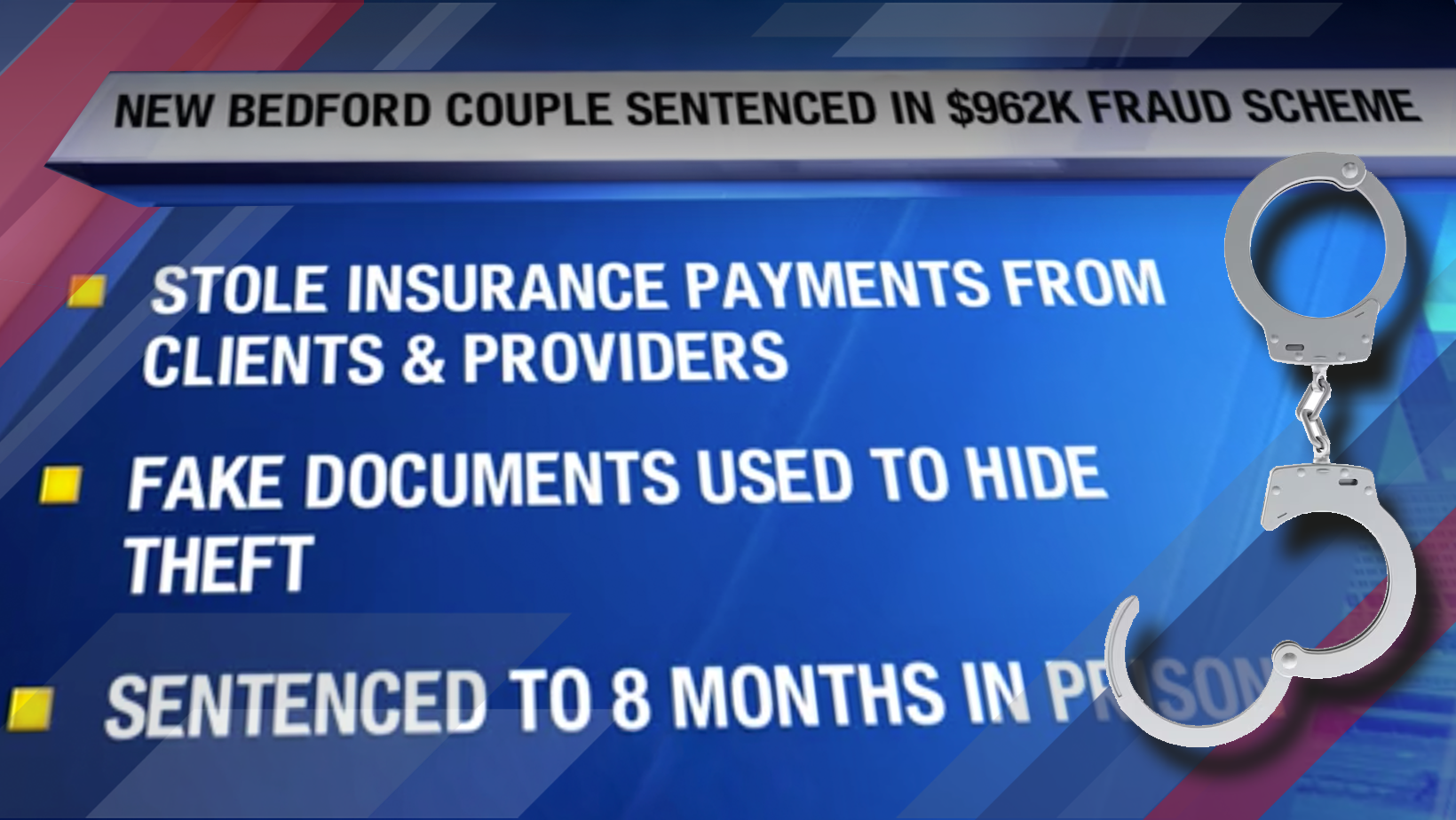
A New Bedford insurance brokerage collected more than $962,000 from clients and financial partners while some customers were led to believe coverage existed when it did not.
The federal case against Brendan and Lisa Lawler is a sharp reminder that premium handling is not merely a bookkeeping function. It is one of the most important trust responsibilities inside an insurance agency.
The married couple operated BL Insurance Brokerage, LLC, in New Bedford, Massachusetts. From March 2023 through March 2024, prosecutors said they accepted payments that should have been sent to insurance companies, but instead used the money for personal purposes and to keep their struggling business operating.
At least 50 customers, insurers and other financial parties were affected. The money came from individual clients, insurance providers, premium finance companies and hard money lenders, showing how a breakdown inside one brokerage can spread far beyond the agency’s own balance sheet.
A Nearly $1 Million Breakdown of Trust
In March 2026, Brendan Lawler, 59, and Lisa Lawler, 46, pleaded guilty to conspiracy to commit wire fraud. Each was later sentenced to eight months in federal prison, followed by three years of supervised release.
They were also ordered to pay restitution, although the final amount had not been determined when the sentence was announced. That unresolved figure matters because the financial damage may include more than the money originally diverted. Customers and business partners can also incur costs associated with replacing coverage, satisfying lenders, correcting records and responding to potential uninsured losses.
The case was investigated with assistance from the Massachusetts Division of Insurance and the Insurance Fraud Bureau, illustrating the cooperation that can occur among federal law enforcement, state regulators and insurance fraud investigators when premium funds are misused.
How the Scheme Operated
According to prosecutors, the Lawlers collected money from clients who believed those payments would secure or maintain insurance coverage. Instead of remitting all of the money to the appropriate insurers, the couple redirected funds for other purposes.
Incoming payments from newer customers were also used to cover outstanding balances associated with other clients. That created a rolling cash flow problem in which each new payment could temporarily conceal an older unpaid obligation.
This type of activity can remain hidden for a period because some policies may still be paid, some customers may receive documents that appear legitimate and some overdue balances may be covered before cancellation notices reach the insured.
“The Lawlers also created and distributed certain insurance documents to clients that falsely suggested that the clients were insured.”
U.S. Attorney’s Office, District of Massachusetts
The use of false insurance documents substantially increased the danger. A missing payment can eventually generate a past-due notice or cancellation warning. A document that appears to confirm coverage may discourage the customer from asking questions until a claim, lender review, registration requirement or contractual deadline exposes the problem.
Premium Payments Are Not Operating Revenue
An agency that collects premium payments is temporarily controlling money intended for another party. Those funds should never be treated as an informal source of working capital, even when an agency is experiencing a short-term cash shortage.
Massachusetts law specifically addresses this responsibility. An agent or broker receiving premium money is considered to hold that premium in trust for the insurance company. Improperly withholding, converting or misappropriating those funds can produce regulatory penalties, license action and criminal exposure.
“Shall be deemed to hold such premium in trust for the company.”
Massachusetts General Laws, Chapter 175, Section 176
The principle extends well beyond Massachusetts. Premium funds are commonly subject to fiduciary obligations under state insurance laws, although the specific accounting, remittance and trust account requirements vary by jurisdiction.
For agency leaders, the practical message is simple: collected premium should be tracked at the customer, policy and carrier level. Management should be able to identify where each dollar came from, where it was deposited, when it was remitted and who authorized the transaction.
The Human Cost Can Be Larger Than the Missing Premium
A customer who pays an insurance agency is usually trying to transfer a risk that could otherwise threaten a home, vehicle, business or family. When the payment does not reach the insurer, the customer may unknowingly continue living or operating as though that protection is in place.
Imagine a business owner who receives what appears to be a valid certificate of insurance and sends it to a landlord, contractor or lender. If the underlying policy was never bound or was canceled for nonpayment, the problem may affect contracts, financing arrangements and access to job sites before a claim ever occurs.
For a homeowner or driver, the consequences can become even more personal. An uncovered accident, fire, theft or liability claim could create a loss many times larger than the premium that was originally taken.
The involvement of premium finance companies and hard money lenders in the New Bedford case also demonstrates the wider network that relies on accurate insurance information. Financed premiums must be properly applied, while lenders may depend on evidence of insurance to protect collateral or satisfy loan conditions.
Controls Agencies Can Strengthen Now
Most agencies already have accounting and policy management procedures in place. The question is whether those procedures can identify a problem quickly when someone attempts to bypass them.
- Separate premium funds: Keep client money distinct from general operating cash and tightly restrict account access.
- Reconcile transactions: Match bank activity, agency management records, carrier statements and premium finance accounts by policy.
- Verify policy issuance: Confirm binders, policies and certificates through authorized carrier or MGA systems.
- Monitor exceptions: Investigate unexplained cancellations, reinstatements, overdue balances, returned premiums and repeated payment complaints.
- Require dual approval: Use a second reviewer for transfers, refunds, account changes and unusual disbursements.
- Conduct independent reviews: Schedule periodic reconciliations and surprise checks by someone outside the normal payment workflow.
No single control is sufficient. A separate bank account offers limited protection if one person controls the deposits, bookkeeping, carrier communications and reconciliation process. Strong systems divide authority and create records that another person can independently verify.
Smaller agencies may find this challenging because employees often perform several roles. Even then, an owner, outside accountant or designated manager can review bank activity against carrier statements and agency management system records on a recurring schedule.
False Documents Create a Separate Control Problem
The allegation involving insurance documents deserves attention apart from the missing premium. Modern software makes it easy to create professional-looking invoices, binders, identification cards and certificates. Appearance alone is not evidence that coverage has been placed.
Agencies should limit who can generate coverage documents and connect document issuance to verified policy data whenever possible. Staff members should not be able to manually create a binder or certificate without an authorized policy, carrier confirmation or documented binding authority.
Audit logs can provide another layer of protection. Management should be able to see who generated a document, when it was created, which policy record supported it and whether later changes were made.
Client-facing documents should also make carrier identity, policy number, effective dates and agency contact information easy to confirm. Customers who receive clear information are better positioned to notice a mismatch before it becomes a crisis.
What Carriers and MGAs Should Watch
Carriers and MGAs cannot manage an independent agency’s daily finances, but they can monitor patterns that may indicate operational distress or improper premium handling.
Repeated late remittances, unusual reinstatement activity, sudden increases in cancellations for nonpayment and inconsistent explanations for missing funds should receive more attention than an isolated administrative error. A cluster of exceptions can be more revealing than any single incident.
Appointment reviews should consider more than production volume and loss ratios. Premium accounting history, complaint trends, responsiveness, licensing status and adherence to documentation requirements can provide important operational context.
Clear escalation procedures are equally important. Front-line billing or underwriting employees may notice suspicious patterns before compliance leadership does. They need a straightforward way to report those concerns without assuming someone else has already investigated them.
The Role of Direct Billing
Direct billing can reduce the amount of premium money passing through an agency and provide customers with immediate confirmation from the insurer. It does not eliminate every risk, but it can simplify reconciliation and reduce opportunities for improper diversion.
Agency-billed business will remain necessary in many commercial, specialty and financed transactions. Those workflows deserve controls proportionate to the amount of money involved and the complexity of the account.
Responding When Coverage Is in Question
When a customer reports that an insurer has no record of a policy or payment, the agency should treat the issue as urgent. The first priority is determining whether valid coverage exists, including the carrier, policy number, effective dates, limits and current payment status.
If information cannot be verified, agency leadership, the appropriate carrier and compliance personnel should be notified promptly. Records should be preserved, including receipts, emails, bank confirmations, policy documents and notes from customer conversations.
Customers should receive clear, factual updates rather than speculation. When appropriate, they may also need information about contacting the carrier directly, verifying producer licensing or submitting a complaint to the state insurance department.
Speed matters because replacement coverage may be needed immediately. Delays can extend an uninsured period or create additional problems involving lenders, contracts and regulatory requirements.
A Case About One Brokerage and an Industry-Wide Responsibility
The New Bedford case involved deliberate criminal conduct by the operators of one brokerage. It should not be viewed as representative of the thousands of agents and agencies that handle premium payments responsibly every day.
It does, however, provide a useful stress test. Agency owners can ask whether their current controls would detect premium money being redirected, older balances being paid with newer receipts or unauthorized documents being issued to customers.
Carriers can review whether warning signs are reaching the right people. Premium finance companies and lenders can examine how they confirm that funds were applied and policies remain active. Employees can be reminded that a payment irregularity is not merely an accounting matter when a customer’s protection may be at risk.
Insurance is built on a promise that becomes valuable at a specific moment of need. Protecting premium funds, verifying policy status and maintaining reliable records are essential parts of keeping that promise intact.