
Young Mother Escapes Rising Floodwater With Her Baby and Finds a Lifeline in Flood Insurance
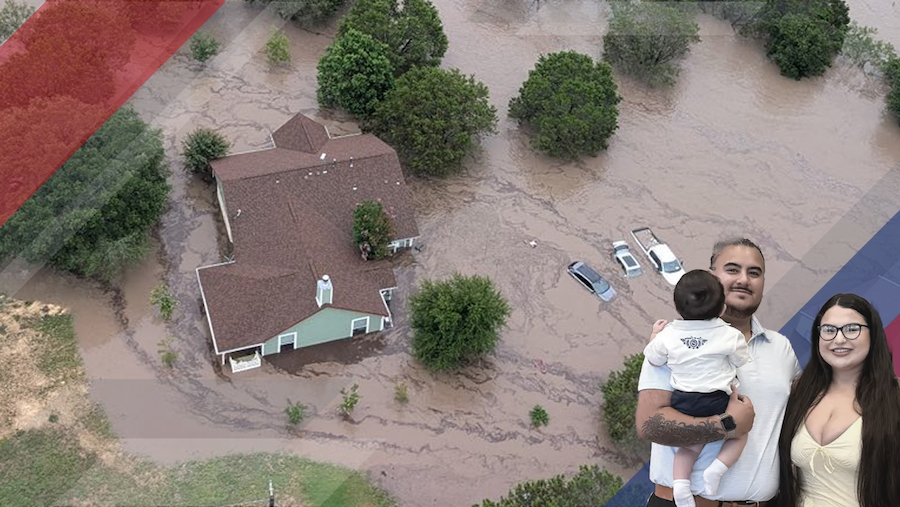
When floodwater began pouring into Destinee Perez’s first-floor apartment, protecting her 9-month-old son mattered more than anything she might have to leave behind.
The young mother was home alone at the Legacy at Cibolo apartment complex in Boerne, Texas, when heavy rain sent water rushing through the balcony, front door and walls. As the water rose, Perez packed emergency bags, secured the family dog and focused on keeping her baby safe.
Her husband encountered closed roads while trying to reach them, but a Boerne police officer helped him get back to the complex. He then waded through waist-high water to reach his wife and son.
The family escaped, but approximately 90% of their furniture was lost, along with clothing, baby toys, photographs, diplomas and deeply personal keepsakes. Contaminated water and mold made the recovery even more complicated.
A Family’s Safety Net After the Water Receded
Perez and her family initially received shelter and assistance from a neighbor. They later stayed with relatives before moving into a backup apartment where they could begin rebuilding their lives.
They also had something many affected renters did not have: flood insurance.
“Thankfully, we have a place to start over, and we do have flood insurance.”Destinee Perez, Boerne flood survivor
That statement captures the practical purpose of insurance. A policy cannot restore a family photograph, replace a loved one’s ashes or erase the fear of watching water enter a home. It can, however, provide money to replace essential belongings at a time when a family is already facing displacement, cleanup costs and emotional exhaustion.
For insurance professionals, the story offers a powerful example of how a relatively overlooked coverage can change the trajectory of recovery.
The Coverage Gap Many Renters Do Not Recognize
Many consumers assume that a standard renters policy protects their belongings from nearly every type of water damage. The distinction between covered water damage and excluded flooding is rarely obvious until a loss occurs.
A renters policy may cover damage caused by certain sudden internal events, such as a burst pipe or an overflowing appliance, depending on the policy language. Rising surface water, overflowing creeks, storm runoff and similar flood events are generally excluded.
The property owner’s insurance does not solve the problem for the tenant. A landlord may insure the apartment building, but that coverage generally applies to the structure and the landlord’s property. It does not insure a tenant’s furniture, clothing, electronics, kitchenware, baby supplies or other personal possessions.
Renters who want protection against rising water typically need a separate contents-only flood policy through the National Flood Insurance Program or an available private flood insurer.
What Contents-Only Flood Insurance Can Protect
A contents-only flood policy is designed to cover eligible tenant-owned property damaged directly by flooding. Under the National Flood Insurance Program, renters may purchase up to $100,000 in personal property coverage, subject to the policy’s terms, deductible, valuation provisions and coverage restrictions.
Covered property may include items found throughout an ordinary apartment:
- Living areas: Furniture, rugs, books, televisions and personal electronics.
- Bedrooms: Clothing, mattresses, bedding and bedroom furniture.
- Kitchens: Tenant-owned appliances, kitchenware, tables and chairs.
- Family necessities: Baby equipment, toys and other household belongings.
- Personal valuables: Certain jewelry, artwork and collectibles, subject to special limits.
Coverage can be more restrictive when property is kept below the lowest elevated floor or in a basement. Certain categories of valuables also have special limits. These details matter because a client who simply hears “up to $100,000” may assume every possession is fully protected in every location.
Agents should help renters select a limit based on the realistic cost of replacing their belongings, not an estimate formed from memory during a quick application.
The Backup Apartment Was a Separate Advantage
Perez’s family was fortunate to have access to another apartment, but insurance professionals should be careful not to imply that every flood policy automatically pays for temporary housing.
National Flood Insurance Program policies generally do not provide additional living expense coverage. That means hotel bills, temporary rent, meals and other displacement costs may not be covered by the flood policy even when insured belongings are severely damaged.
Some private flood products may offer broader coverage or optional benefits, but terms vary. A standard renters policy may also provide additional living expense coverage when displacement results from a loss covered by that policy, yet a flood exclusion can prevent that benefit from applying when rising water caused the damage.
This is an important conversation for agents. Clients need to understand not only what the flood policy covers, but also how they would pay for temporary housing if their unit became uninhabitable.
Why the Ground-Floor Detail Matters
Perez lived on the first floor, where water entered quickly from several directions. Ground-floor units may offer convenience, but they can carry a substantially different flood exposure than units located several stories above the surrounding terrain.
A renter does not need to live beside an ocean or major river to experience a damaging flood. Intense rainfall, overwhelmed drainage systems, nearby construction, overflowing creeks and runoff from higher ground can place apartments at risk with little warning.
Flood maps remain useful, but they should not be treated as a complete prediction of where water will go during a specific storm. Flood losses also occur in areas considered to have low or moderate risk.
For agents, a client’s unit location can open a much more productive discussion than simply asking whether the property is in a designated high-risk zone. The floor level, nearby drainage, proximity to creeks and the client’s ability to absorb a major contents loss all deserve consideration.
Documentation Can Determine How Smoothly Recovery Begins
Perez’s family lost ordinary household property as well as irreplaceable keepsakes. The story illustrates why documenting belongings before a disaster can be almost as important as purchasing the coverage itself.
After a flood, families may be asked to identify damaged items, their approximate age and their value. Reconstructing that information while displaced and emotionally overwhelmed can be extremely difficult.
Agents can encourage clients to walk through their homes periodically while recording a simple video. Receipts, serial numbers and photographs of higher-value property can be stored digitally so they remain accessible if a phone, computer or paper file is destroyed.
Clients should also understand the insurer’s claim instructions before discarding damaged property. Health and safety take priority, particularly when water may be contaminated or mold is developing, but photographs, item lists, samples and cleanup receipts may become important claim documentation.
The Waiting Period Makes Early Conversations Essential
Flood insurance usually cannot be purchased after the rain starts and immediately applied to the approaching event. National Flood Insurance Program policies generally have a 30-day waiting period, although limited exceptions may apply.
That timing creates a clear role for agents. Flood coverage should be discussed during ordinary renters reviews, lease changes, relocations and annual policy conversations, not only when a tropical system or severe storm appears in the forecast.
The most useful question may be straightforward: “Could you afford to replace nearly everything in your apartment without insurance?”
For a young family, the answer may involve much more than replacing a couch and television. Cribs, car seats, clothing, feeding supplies, computers, work equipment and daily necessities can create a significant financial burden almost overnight.
A Practical Opportunity for Agencies
Renters policies are often treated as small, transactional accounts. Applications may be completed quickly, premiums are comparatively modest and the client may have limited contact with the agency after purchase.
That approach can leave important exposures unexplored. A short, structured flood conversation gives agencies an opportunity to provide meaningful advice without relying on fear-based selling.
Clarify the Definition of Flood
Agents can explain that water coming from inside the home may be treated differently from water rising or flowing across normally dry land. The exact policy language remains controlling, but the distinction helps clients understand why separate coverage exists.
Separate Building Coverage From Contents Coverage
Renters frequently believe the landlord’s policy protects everything inside the apartment. A clear explanation of ownership makes the gap easier to understand: the landlord insures the building, while the tenant remains responsible for insuring personal property.
Discuss Displacement Before It Happens
Clients should know whether temporary housing would be covered, excluded or limited after a flood. Where coverage is unavailable, the agency can still encourage emergency savings, family contingency plans and other practical preparations.
Document the Offer
Agencies should maintain a consistent process for offering flood insurance, recording the client’s decision and revisiting the exposure at renewal. This improves client education while supporting sound errors and omissions risk management.
What Carriers Can Learn From the Human Side of the Claim
For carriers and claims organizations, flood losses are not merely inventories of damaged property. Policyholders may be caring for children, searching for temporary shelter, dealing with contaminated belongings and grieving the loss of objects that cannot be replaced.
Clear first-contact instructions can reduce uncertainty. Policyholders need to know how to protect themselves, report the loss, document damage, begin necessary cleanup and preserve information for the adjuster.
Fast acknowledgment also matters. Even when the final claim evaluation requires time, an early response can reassure families that the process has begun and explain what they should expect next.
Empathy does not replace accurate adjusting, but it can shape how the entire claim experience is remembered.
“You truly don’t know what it is like to lose just about everything until you’ve encountered it.”Destinee Perez, describing the strain of disaster recovery
Insurance Cannot Replace Everything, but It Can Preserve Choices
Perez and her family still faced an exhausting recovery. They lost personal property, treasured memories and the familiar surroundings of home. Flood insurance did not eliminate that hardship.
What it provided was a financial path forward. Combined with temporary housing and support from neighbors, relatives and strangers, the coverage gave the family more options than many uninsured renters would have after the same event.
That is the lesson insurance professionals can carry into future client conversations. Flood coverage is not only about maps, limits and deductibles. It is about whether a young family must rebuild entirely from personal savings or can begin replacing the everyday items that make a new space feel like home.
For agents and agencies, the opportunity is to identify the gap before the water rises. For carriers, it is to make coverage and claims guidance understandable when policyholders are under tremendous stress. For the industry as a whole, stories like this demonstrate the value of helping consumers prepare for a risk they may never believe will reach their own front door.