
One Family’s Journey Home Reveals the Insurance Lessons Every Wildfire Client Needs
The Figueroa family’s return to Altadena after the Eaton Fire is more than a moving recovery story, it is a practical reminder that insurance recovery is measured in months, money, documentation, and trust.
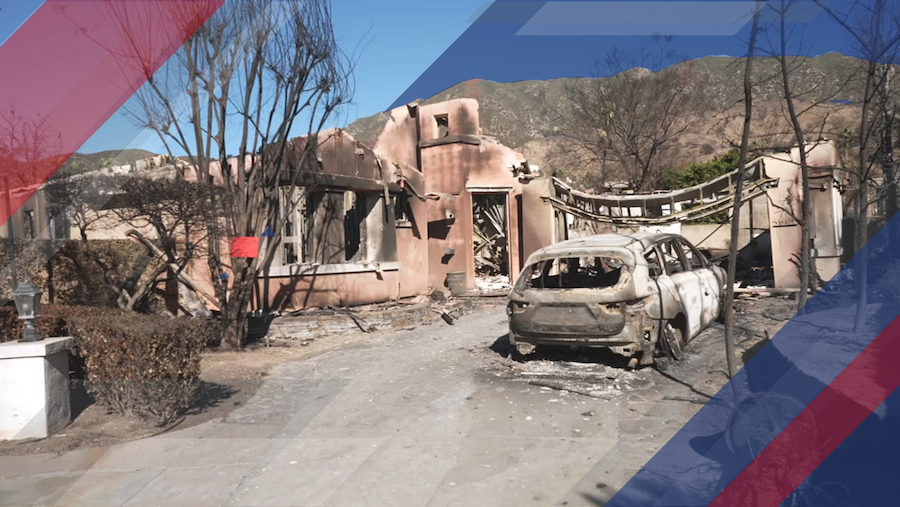
A Homecoming That Shows the Full Recovery Arc
When a family finally moves back into a rebuilt home after a wildfire, the moment can look like the end of the story. For insurance professionals, it is better understood as a milestone in a much longer process.
In a recent Wall Street Journal profile, the Figueroa family of Altadena returned to a newly rebuilt, fire-resistant home 16 months after the January 2025 Eaton Fire destroyed their house. The article described a family that did many things right, moved quickly, accepted help, made difficult financial decisions, and still faced a long, emotional, expensive road home.
That is what makes the story so valuable for agents, agencies, carriers, adjusters, and risk advisors. It puts a human face on the coverage issues that often sound routine during renewal season: dwelling limits, contents documentation, additional living expense, debris removal, ordinance or law coverage, construction inflation, loan capacity, mitigation credits, and the family’s ability to keep life moving while the claim unfolds.
“It is wildly quiet.”
Missi Figueroa, as reported by The Wall Street Journal
That short quote captures something every insurance professional should remember. Rebuilding a structure is not the same as restoring a neighborhood. A family can have keys, walls, appliances, and a roof again, yet still be living inside a community that is waiting for roads, contractors, schools, utilities, neighbors, local businesses, and emotional routines to return.
Why This Story Matters to the Insurance Industry
The Eaton Fire was not an isolated household loss. California fire officials reported that it burned more than 14,000 acres in Los Angeles County, and the broader Palisades and Eaton disaster footprint produced tens of billions of dollars in estimated residential and commercial property losses. State insurance data later showed billions of dollars in claim payments flowing to homeowners, renters, businesses, and displaced families.
Those numbers are important, but they can flatten the human reality. The Figueroa family’s journey shows what those figures mean at kitchen-table level. A total loss can become an extended financial project, a housing project, a documentation project, a rebuilding project, and a mental health project all at once.
For agents and carriers, the lesson is not simply that wildfire risk is growing. The lesson is that a policyholder’s ability to recover depends on the quality of the insurance conversation before the fire, the clarity of the claim process after the fire, and the realism of the coverage limits in between.
The Coverage Issues Hidden Inside One Family’s Rebuild
The most powerful part of the Figueroa story is how many familiar coverage pressure points appear in one household’s recovery. None of them are abstract. Each one affects whether a family can move from temporary survival to genuine return.
Contents Inventories Are Not Paperwork, They Are Recovery Tools
After a wildfire, clients are often asked to remember everything they owned while they are grieving everything they lost. That is a difficult, sometimes impossible assignment. The National Association of Insurance Commissioners and the Insurance Information Institute have long urged homeowners to maintain updated home inventories because photos, videos, receipts, model numbers, and room-by-room lists help support a detailed claim.
For agents, this is a practical service opportunity. A five-minute renewal reminder can make a major difference later: walk through the home with a phone camera, open closets and drawers, record serial numbers for major items, store receipts digitally, and keep the inventory somewhere outside the home. The best inventory is not perfect. It is accessible.
Temporary Housing Can Become a Long-Term Stress Test
Additional living expense is one of the most important coverages after a major property loss, yet many insureds do not understand how it works until they are displaced. A wildfire can make that displacement unusually long because entire communities may be competing for rentals, contractors, permits, debris removal, inspections, and basic rebuilding capacity at the same time.
That is why agents should review both the dollar limit and the time limit. A client may have enough coverage for a short disruption but not enough for a year or more in a high-cost housing market. Carriers and agencies can also reduce friction by communicating early about documentation expectations, habitability determinations, extensions, and the difference between covered living expenses and ordinary household costs.
Rebuild-Cost Gaps Are Often Discovered Too Late
The cost to rebuild after a catastrophe is rarely the same as the market value of a home or the coverage amount selected years earlier. Labor shortages, material costs, debris removal, design work, code upgrades, site conditions, and demand surge can all widen the gap between insured value and actual rebuild cost.
This is where annual insurance reviews need to be more candid. Replacement cost estimators are useful, but they are not a substitute for conversation. Has the client remodeled? Added square footage? Upgraded finishes? Built an accessory dwelling unit? Added solar, a deck, custom cabinetry, or specialty systems? In wildfire-prone markets, the answer to those questions can change the recovery outcome.
Loans, Donations, and Savings Tell a Hard Truth
The Journal’s reporting showed that the Figueroa family’s path home involved more than insurance proceeds. Their recovery also depended on persistence, personal resources, outside support, and difficult financial choices. That is common after large disasters, especially when rebuilding costs exceed policy limits or when cash is needed before claim payments arrive.
This is not a failure of resilience. It is a warning sign for the industry. When households need loans, savings, donations, or family support to bridge the rebuild, agents and carriers should ask whether coverage design, limit adequacy, claim payment timing, and customer education are keeping pace with real recovery costs.
A Practical View for Agents, Agencies, and Carriers
The insurance industry often talks about catastrophe response in operational terms: claims volume, severity, reserves, reinsurance, field adjusting, regulatory compliance, and loss costs. Those are essential. But from the client’s perspective, the experience is more personal: Where do we sleep tonight? What did we own? Can we rebuild here? What will insurance pay? How long will this take? Who can explain the next step?
That is why the best insurance professionals are not merely policy sellers or claim processors. They are translators. They turn policy language into decisions a family can act on.
| Moment | Risk | Response |
|---|---|---|
| Evacuation: Family leaves before knowing the loss severity. | Confusion: Coverage questions arrive during immediate emotional shock. | Prepare: Share claim steps before wildfire season begins. |
| Inventory: Personal property list must be rebuilt from memory. | Delay: Missing documentation can slow contents claim payments. | Document: Encourage digital photos, videos, receipts, and backups. |
| Rebuild: Construction costs exceed what families expected. | Gap: Limits may trail materials, labor, and code costs. | Review: Recheck dwelling, ordinance, debris, and extended limits. |
Mitigation Is Becoming Part of the Insurance Conversation
The Figueroas rebuilt with fire-resistant features, and that detail matters. Wildfire mitigation is no longer a side topic for homeowners in high-risk regions. It is increasingly part of underwriting, pricing, customer retention, public policy, and community resilience.
Organizations such as the Insurance Institute for Business & Home Safety, the National Fire Protection Association, and CAL FIRE have emphasized the importance of the home ignition zone, especially the first five feet around a structure. Ember-resistant materials, enclosed eaves, Class A roofing, screened vents, noncombustible perimeter materials, defensible space, and careful maintenance can reduce vulnerability when embers and radiant heat threaten a home.
For insurance professionals, the opportunity is to make mitigation feel actionable rather than overwhelming. Clients do not need a lecture. They need a prioritized path: roof, vents, gutters, decks, fences, vegetation, storage, and the near-home zone. Carriers that recognize verified mitigation through underwriting, pricing, or eligibility can reinforce the same behavior agents are trying to encourage.
The Regulatory and Claims Environment Is Also Part of the Story
After the Southern California wildfires, California insurance regulators reminded insurers about advance payments, additional living expense obligations, and the need to help policyholders receive benefits promptly. That matters because catastrophe recovery creates intense pressure on every participant: policyholders need cash and answers, insurers need documentation and discipline, and regulators expect both speed and fairness.
“My top priority is ensuring that wildfire survivors receive the insurance benefits they are entitled to, and that they receive them as soon as possible.”
California Insurance Commissioner Ricardo Lara
For carriers, this reinforces the importance of clear claim communications, trained catastrophe teams, consistent documentation standards, and empathy that does not sacrifice accuracy. For agencies, it reinforces the need to stay close to clients after the first notice of loss. A client may not remember every coverage detail, but they will remember who explained the next step and who called back.
One Section Agents Can Turn Into Client Outreach
The Figueroa story can become more than a news item. It can become a timely client conversation. Agencies serving wildfire-exposed communities can use it to frame a practical coverage review without fear-based messaging.
- Rebuild cost: Ask whether the dwelling limit reflects today’s labor, materials, design, and code costs.
- Contents: Encourage a phone video inventory and cloud storage before evacuation season.
- Temporary housing: Review additional living expense limits, timeframes, and local rental realities.
- Mitigation: Discuss the first five feet, roof condition, vents, gutters, decks, and nearby combustibles.
- Cash flow: Explain deductibles, advance payments, mortgage concerns, and documentation expectations.
What Carriers Can Learn From a Family That Made It Back
Carriers have a difficult job in wildfire markets. They must price risk responsibly, manage accumulation, satisfy regulators, support solvency, and still deliver on the promise policyholders purchased. Stories like the Figueroas’ help sharpen that mission.
A fast claim payment is important, but not enough on its own. A family also needs plain-language explanations, continuity, realistic timelines, and help understanding what each payment is meant to cover. When the process is fragmented, frustration rises. When the process is coherent, trust has a better chance to survive even when the loss is severe.
Carriers can also use recovery stories to improve product design. Are extended replacement cost options adequate in catastrophe-prone ZIP codes? Are ordinance and law limits keeping up with rebuilding requirements? Are contents processes flexible enough for total-loss households? Are mitigation features being captured consistently? Are agents equipped with clear talking points before renewal?
The Agency Opportunity: Be the Calm Before the Claim
Independent agents and local agencies are especially well positioned to turn this story into action. They know the neighborhoods. They understand local construction costs. They hear when carriers are tightening underwriting. They know which clients have older homes, recent remodels, limited savings, or outdated coverage.
The most valuable agency conversations may happen months before any smoke appears. A proactive review can uncover a dwelling limit that has not kept pace, a missing scheduled item, a weak contents inventory, an assumption about temporary housing, or a mitigation step that could make the home more insurable.
That is also good business. Clients who understand their coverage are less likely to be surprised, more likely to value professional advice, and more likely to see their agent as part of their recovery team rather than a renewal transaction.
Recovery Is Personal, But Preparedness Is Professional
The Figueroa family’s return to Altadena is encouraging because it shows resilience in motion. It also shows how hard resilience can be. Their homecoming required insurance, persistence, financing, community support, rebuilding decisions, and the emotional strength to start again in a neighborhood still finding its way back.
For the insurance industry, that is the point. Every policy review, every mitigation conversation, every contents inventory reminder, every clear claim explanation, and every realistic rebuild-cost discussion can make a future recovery less chaotic.
A rebuilt home is a powerful symbol. For agents, agencies, and carriers, it is also a call to make sure more families have the coverage, documentation, guidance, and risk-reduction support they need long before the next wildfire tests the promise of their policy.